AIIMS New Delhi says its doctors repaired an unborn baby's spinal defect at 25 weeks of pregnancy, a first in India
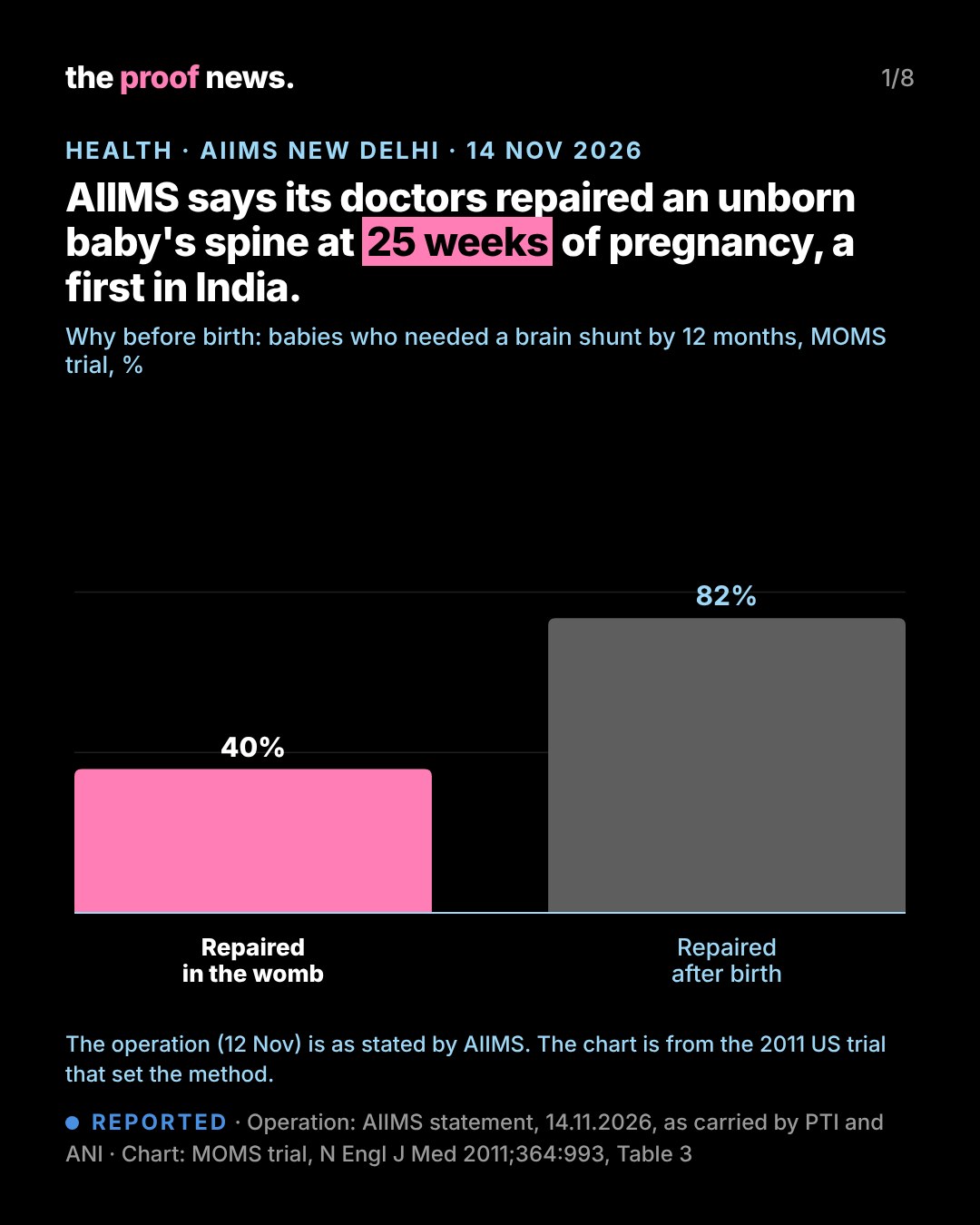
The six-hour open operation on 12 November closed a myelomeningocele, the most severe form of spina bifida, in the womb. The landmark US trial behind the method found fewer brain shunts and better walking, at the cost of more premature births.
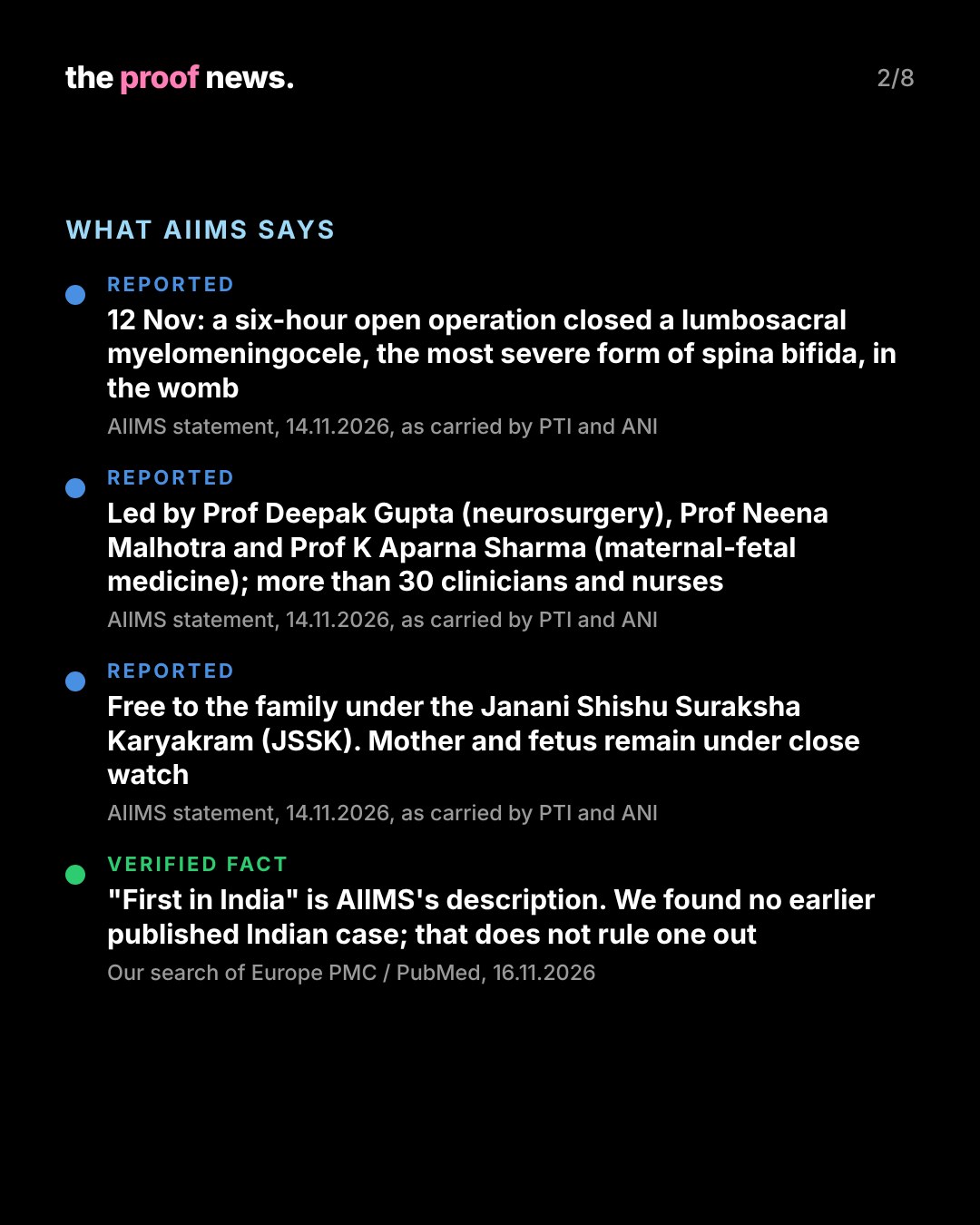
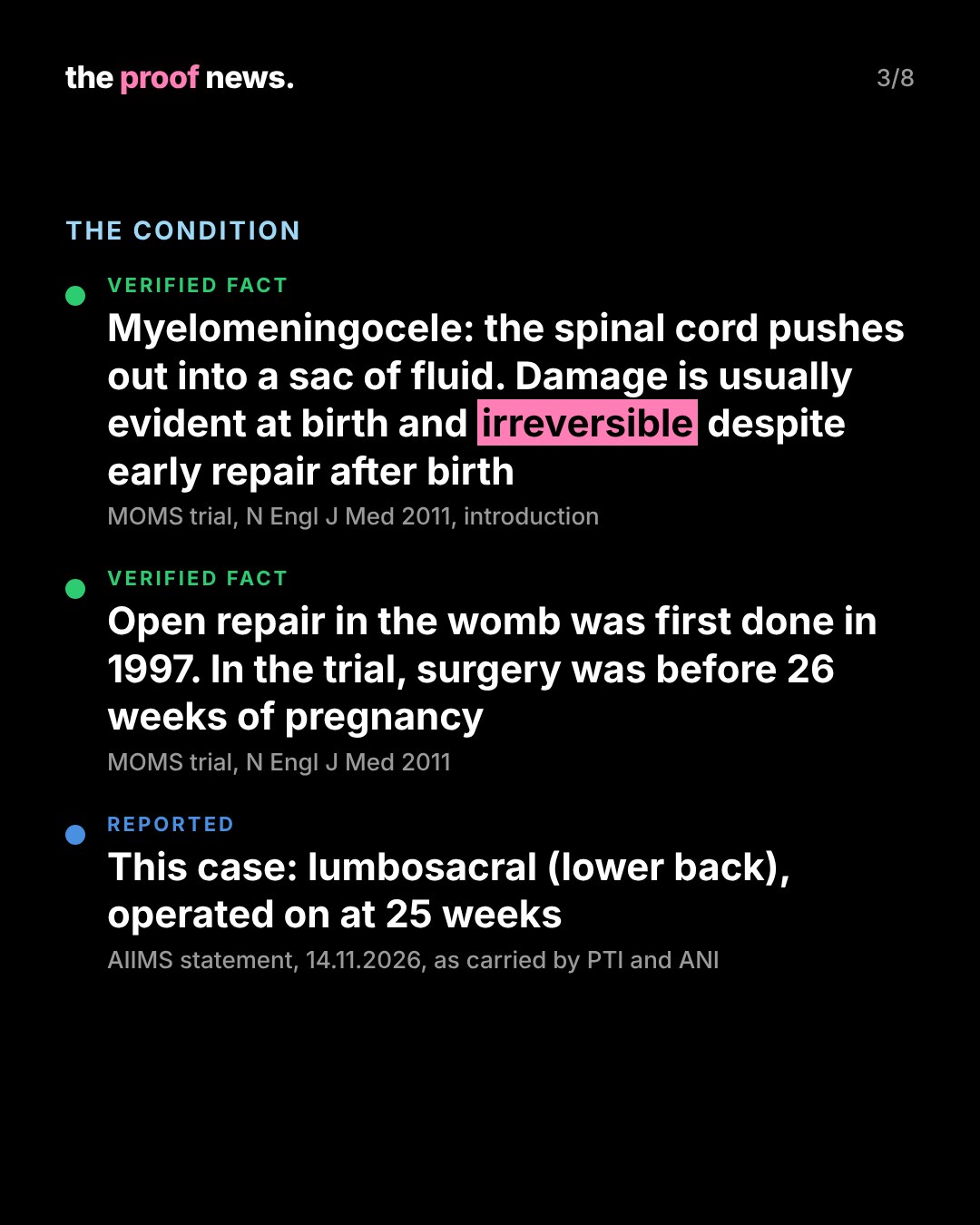
ReportedAIIMS New Delhi said on 14 November 2026 that its doctors had performed an open fetal repair of a lumbosacral myelomeningocele, the most severe form of spina bifida, at 25 weeks' gestation. The six-hour operation, on 12 November at the AIIMS Neurosciences Centre, closed the defect, which was leaking cerebrospinal fluid, while the fetus was still in the womb. The account is from the AIIMS statement as carried by PTI and ANI; we could not retrieve the original from AIIMS, and will upgrade the label when we do.
ReportedAccording to AIIMS, the neurosurgical part was led by Prof Deepak Gupta, President of the Indian Society for Pediatric Neurosurgery, and the maternal-fetal medicine and obstetric part by Prof Neena Malhotra and Prof K Aparna Sharma, with obstetric anaesthesia and neuroanaesthesia, plastic surgery, radiodiagnosis and neonatology teams: more than 30 clinicians and nurses in all. It followed more than five weeks of planning, including fetal imaging, non-directive counselling, anaesthetic preparation and operative simulation.
ReportedThe procedure was free of cost to the family under the Janani Shishu Suraksha Karyakram (JSSK), AIIMS said. The mother and fetus will remain under close multidisciplinary surveillance through the pregnancy, delivery and the newborn period. The outcome is not yet known.
Official recordJSSK, launched on 1 June 2011, entitles pregnant women delivering in public health institutions to free delivery, including caesarean section; since 2014 it also covers antenatal and postnatal complications and sick infants up to one year of age (National Health Mission).
Verified factAIIMS describes the operation as India's first open fetal repair of myelomeningocele. We searched the medical literature (Europe PMC/PubMed, 16 November 2026) and found no earlier published report of a prenatal myelomeningocele repair performed in India; that does not rule out an unpublished one.
Verified factWhat the defect is: in myelomeningocele the spinal cord pushes out into a sac filled with cerebrospinal fluid, resulting in lifelong disability; the damage is usually evident at birth and irreversible despite early repair after birth (MOMS trial report, New England Journal of Medicine, 2011). Open repair before birth was first performed in 1997.
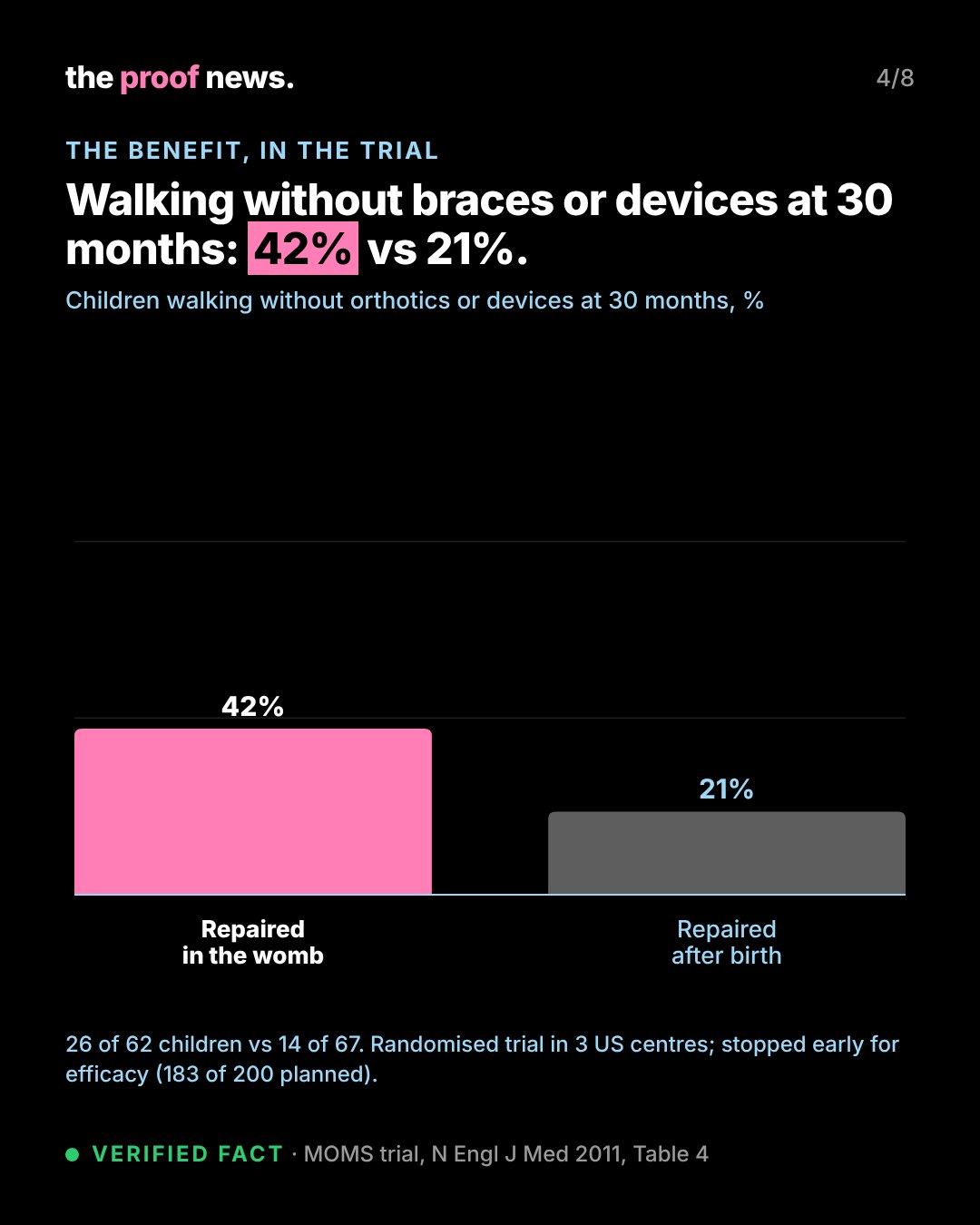
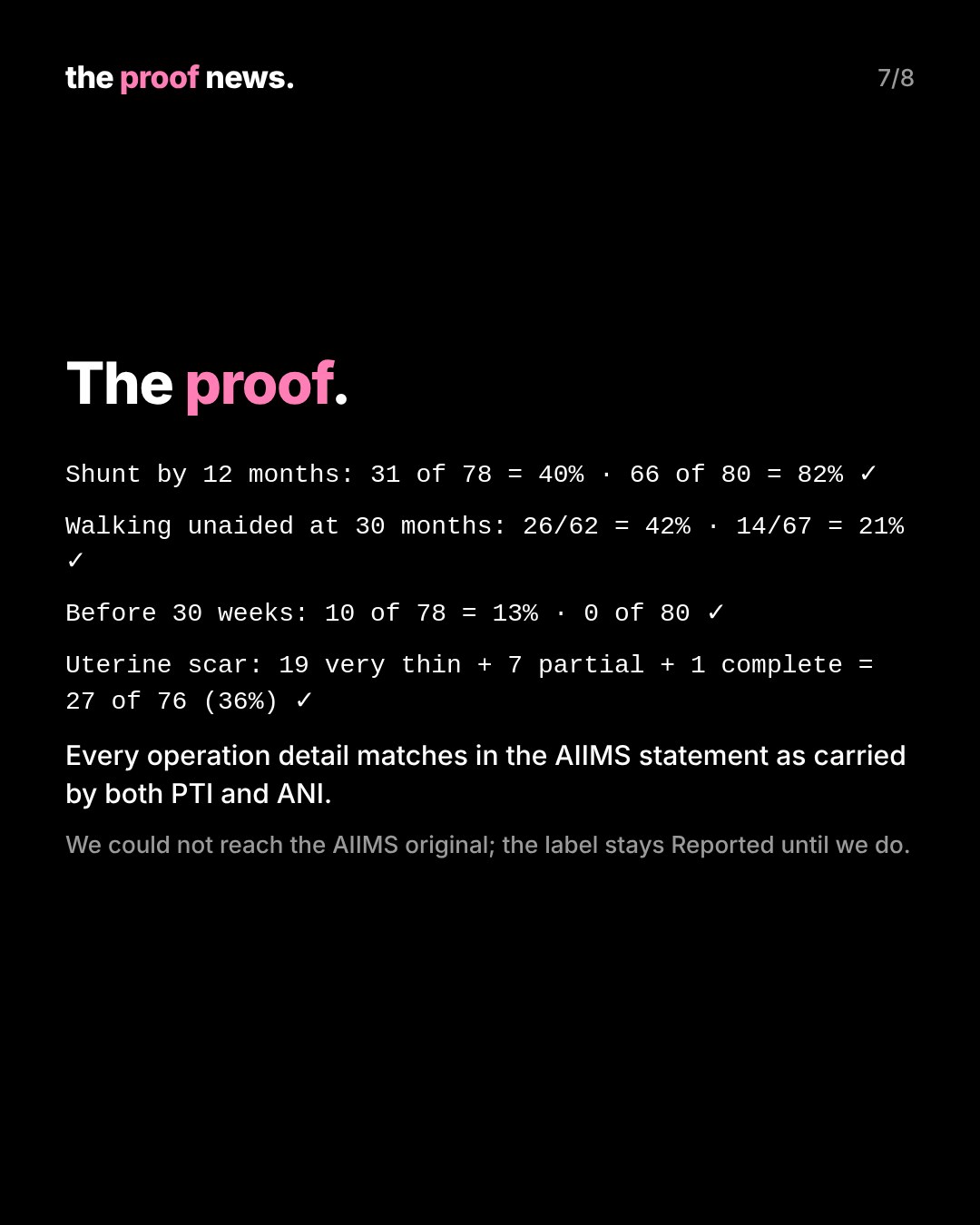
Verified factThe evidence: the Management of Myelomeningocele Study (MOMS), a randomised trial at three US centres, compared surgery before 26 weeks of pregnancy with standard repair after birth. It was stopped early for efficacy after 183 of a planned 200 women were enrolled. Of 78 babies repaired in the womb, 40% (31) had a shunt placed for hydrocephalus by 12 months, against 82% (66 of 80) repaired after birth. At 30 months, 42% (26 of 62) walked without orthotics or devices, against 21% (14 of 67).
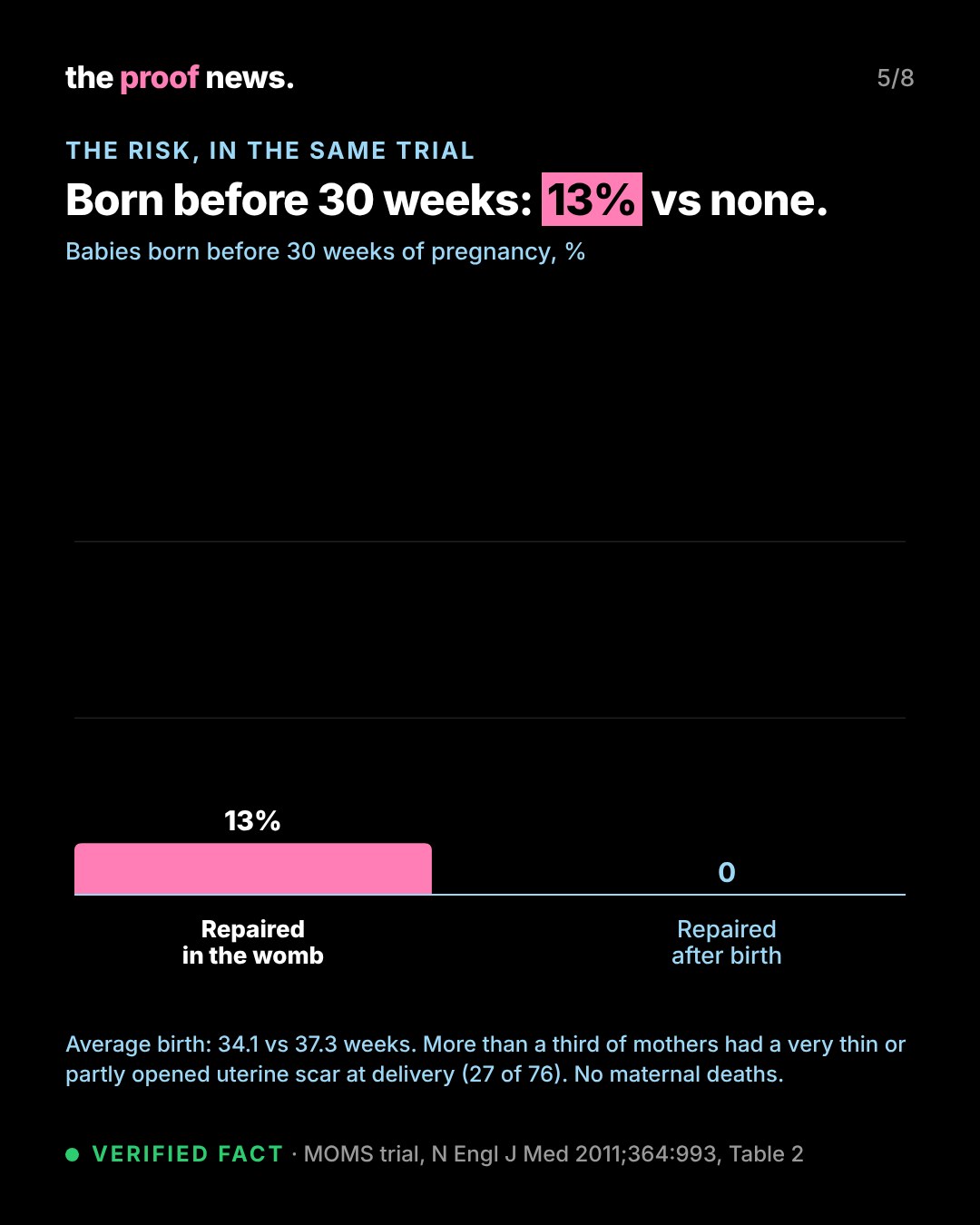
Verified factThe risks, in the same trial: 13% of babies operated on in the womb (10 of 78) were born before 30 weeks, against none in the other group; the average birth was at 34.1 weeks against 37.3. More than a third of the mothers (27 of 76) had a very thin or partly or fully opened uterine scar at delivery, and the authors say all later pregnancies should be delivered by caesarean before labour. There were no maternal deaths.
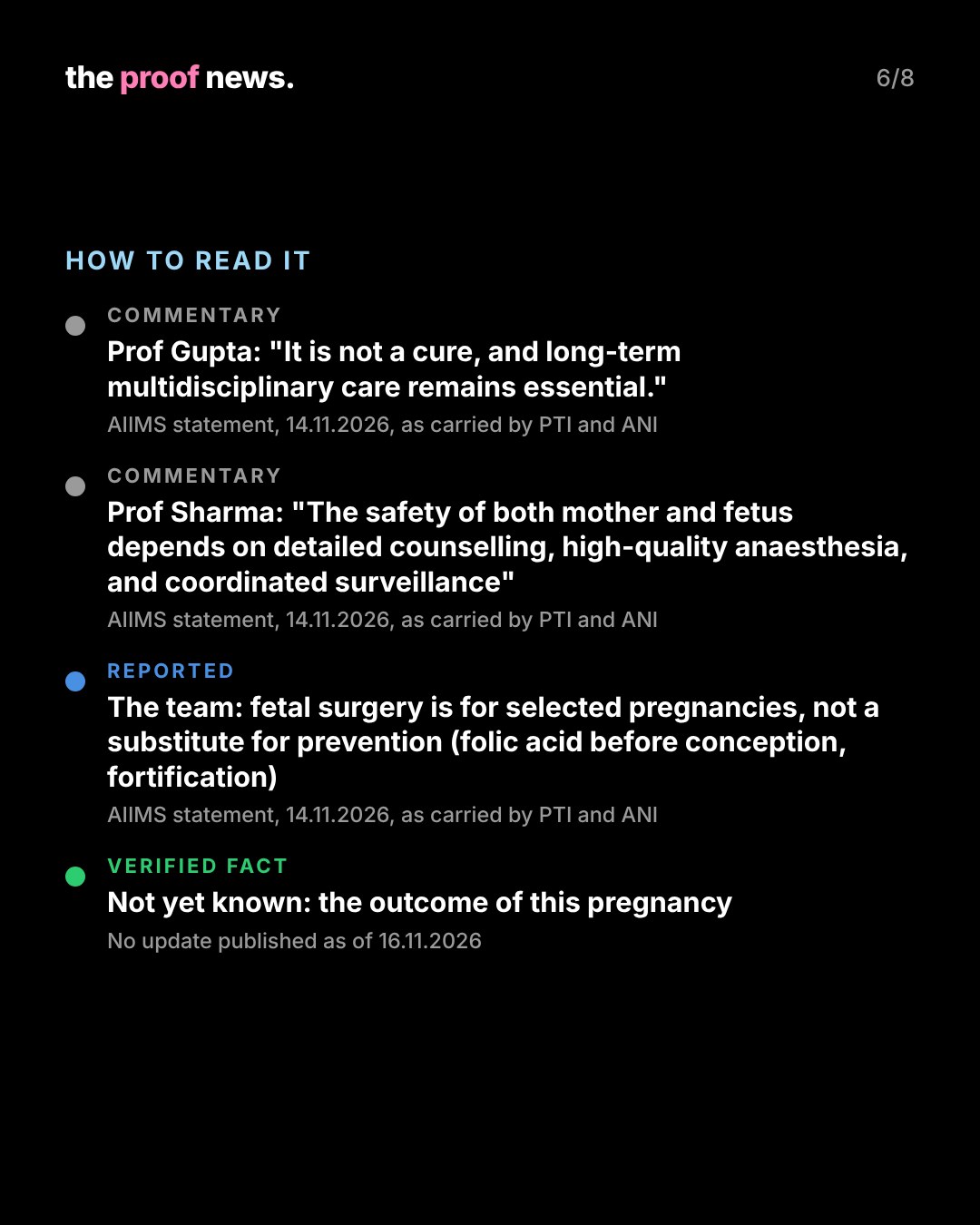
CommentaryProf Gupta, in the AIIMS statement: "In rigorously selected cases, prenatal repair seeks to limit ongoing injury to exposed neural tissue, reduce the subsequent need for cerebrospinal-fluid diversion for hydrocephalus, and improve selected neurological outcomes. It is not a cure, and long-term multidisciplinary care remains essential." Prof Sharma: "The safety of both mother and fetus depends on detailed counselling, high-quality anaesthesia, and coordinated surveillance before and after surgery."
ReportedThe team said fetal surgery is a treatment for selected pregnancies and not a substitute for prevention: the neural tube closes about 28 days after conception, often before a pregnancy is known, so folic acid before conception and food fortification remain essential.
Verified factWhat is not known, and what to watch: the outcome of this pregnancy and of the newborn; whether the baby will need a shunt; and whether AIIMS will offer the procedure routinely, with what selection criteria. The family has not been identified, and no images of the mother or baby have been released.
The proof.
Every trial figure is recomputed from the counts in the NEJM tables (31/78 = 40%, 66/80 = 82%, 26/62 = 42%, 14/67 = 21%, 10/78 = 13%, 27/76 more than a third). Every detail of the operation appears identically in the AIIMS statement as carried by both PTI and ANI; the label stays Reported until we retrieve the AIIMS original.
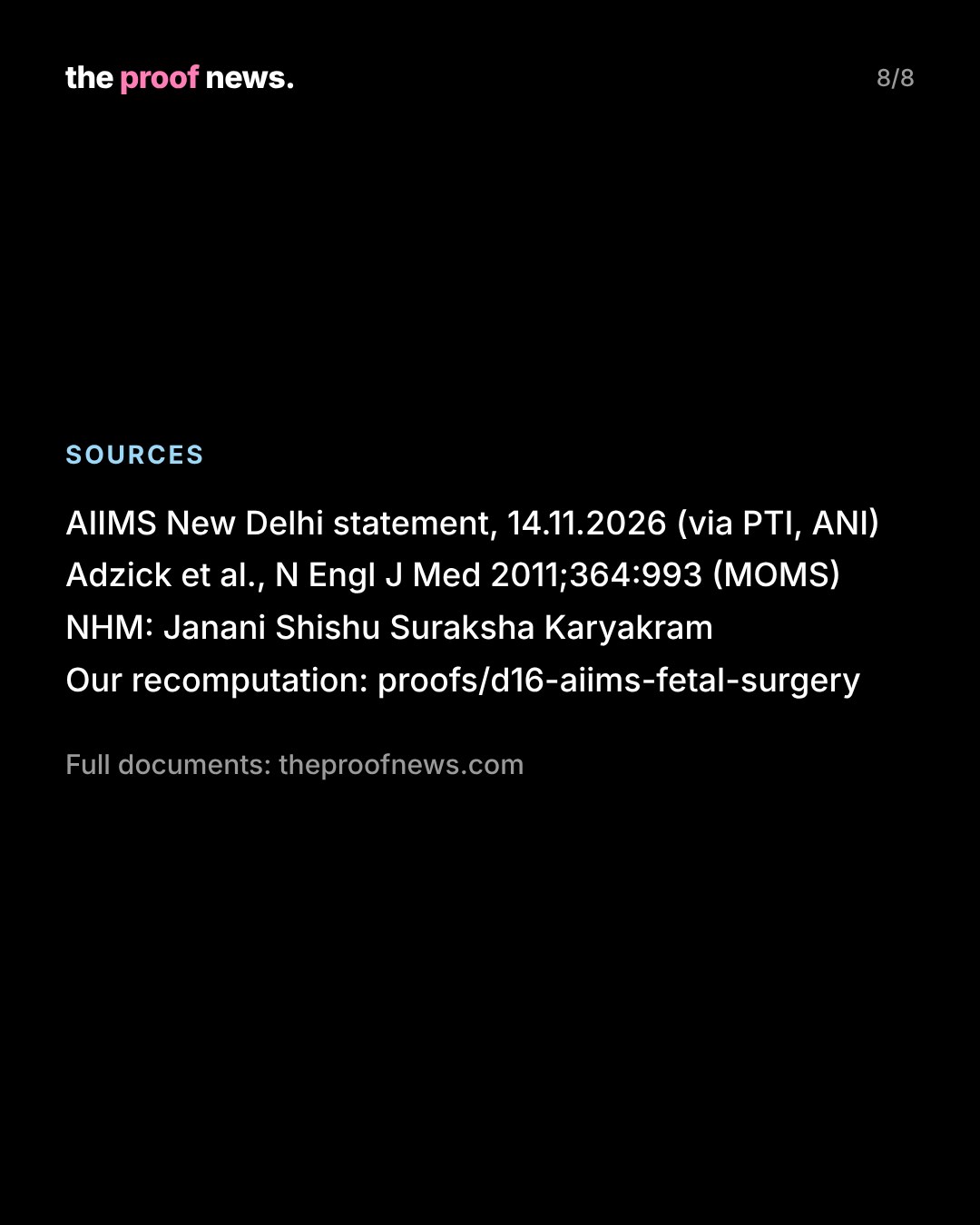
- AIIMS New Delhi statement, 14.11.2026, as carried by ANI
- AIIMS New Delhi statement, 14.11.2026, as carried by PTI (The Patriot)
- Adzick NS et al., A randomized trial of prenatal versus postnatal repair of myelomeningocele, N Engl J Med 2011;364:993-1004 (full text, PMC)
- MOMS trial abstract (PubMed 21306277)
- National Health Mission: Janani Shishu Suraksha Karyakram