ICMR survey: 55.9% of women aged 15–49 anaemic; the comparison with NFHS-5 is not like-for-like
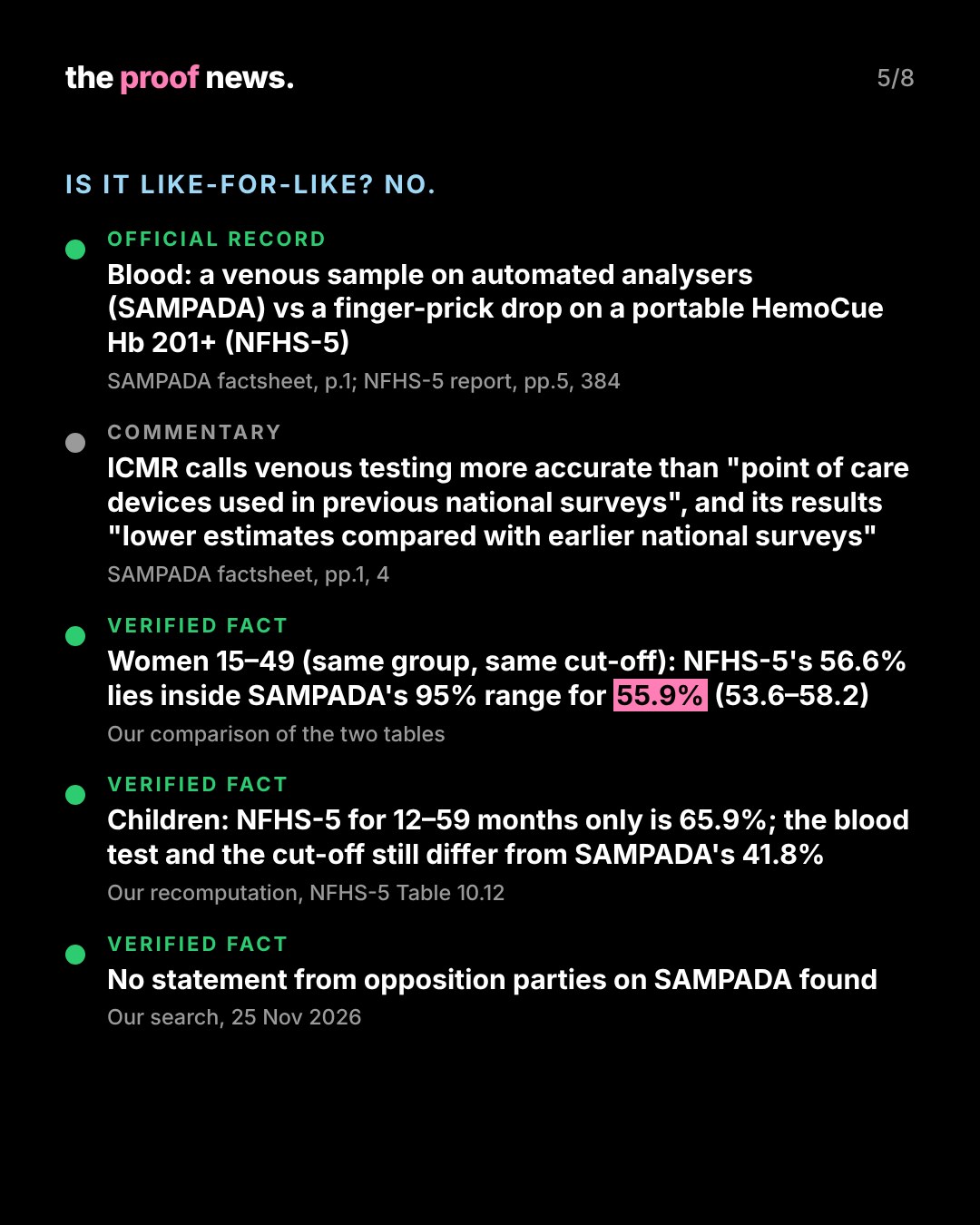
The Health Ministry says ICMR's SAMPADA survey shows lower anaemia than previous national surveys. It used venous blood; NFHS-5 used a finger-prick drop. For the closest matching group of women the two surveys differ by 0.7 points; for children, the age range and cut-off changed as well.
Official recordThe Indian Council of Medical Research (ICMR) has released fact sheets on anaemia and micronutrient deficiencies from the Survey for Assessment of Markers of Population Health, Activity, Diet and Anthropometry (SAMPADA) 2023–25, the Ministry of Health and Family Welfare said in a release posted by PIB on 23 November 2026 (release ID 2340476). The survey, run by the ICMR-National Institute of Nutrition (NIN), Hyderabad, covered over 2,00,000 individuals in more than 81,000 households across 183 districts in 35 states and union territories, and analysed over 1.7 lakh blood samples, according to the fact sheets.
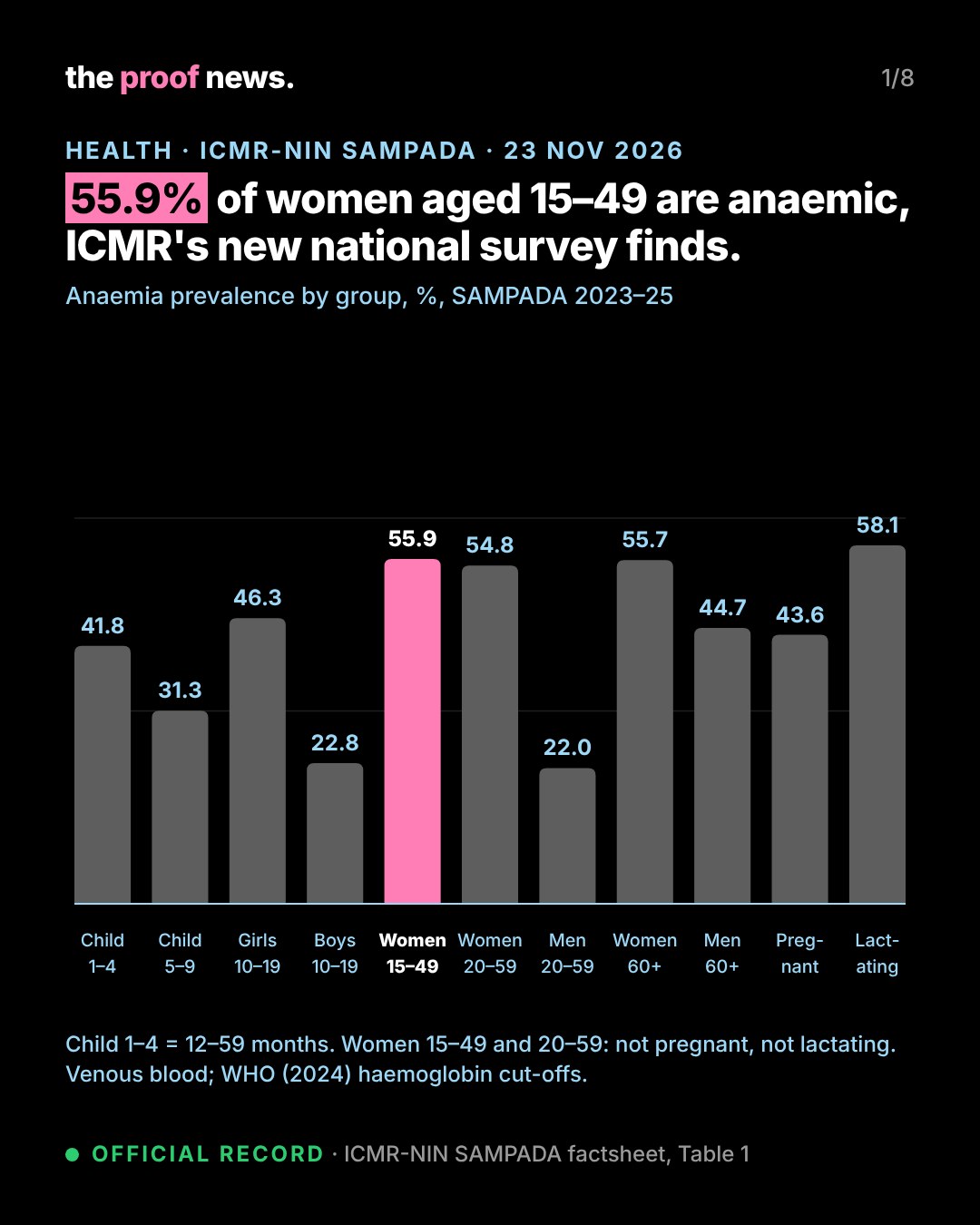
Official recordAnaemia prevalence, all-India (Table 1 of the fact sheets; WHO 2024 haemoglobin cut-offs): women aged 15–49 who are not pregnant or lactating 55.9% (95% confidence interval 53.6–58.2); women aged 20–59, not pregnant or lactating, 54.8%; lactating women 58.1%; pregnant women 43.6%; women aged 60 and over 55.7%; adolescent girls aged 10–19 46.3%; children aged 12–59 months 41.8%; children aged 5–9 years 31.3%; men aged 60 and over 44.7%; adolescent boys aged 10–19 22.8%; men aged 20–59 22.0%.
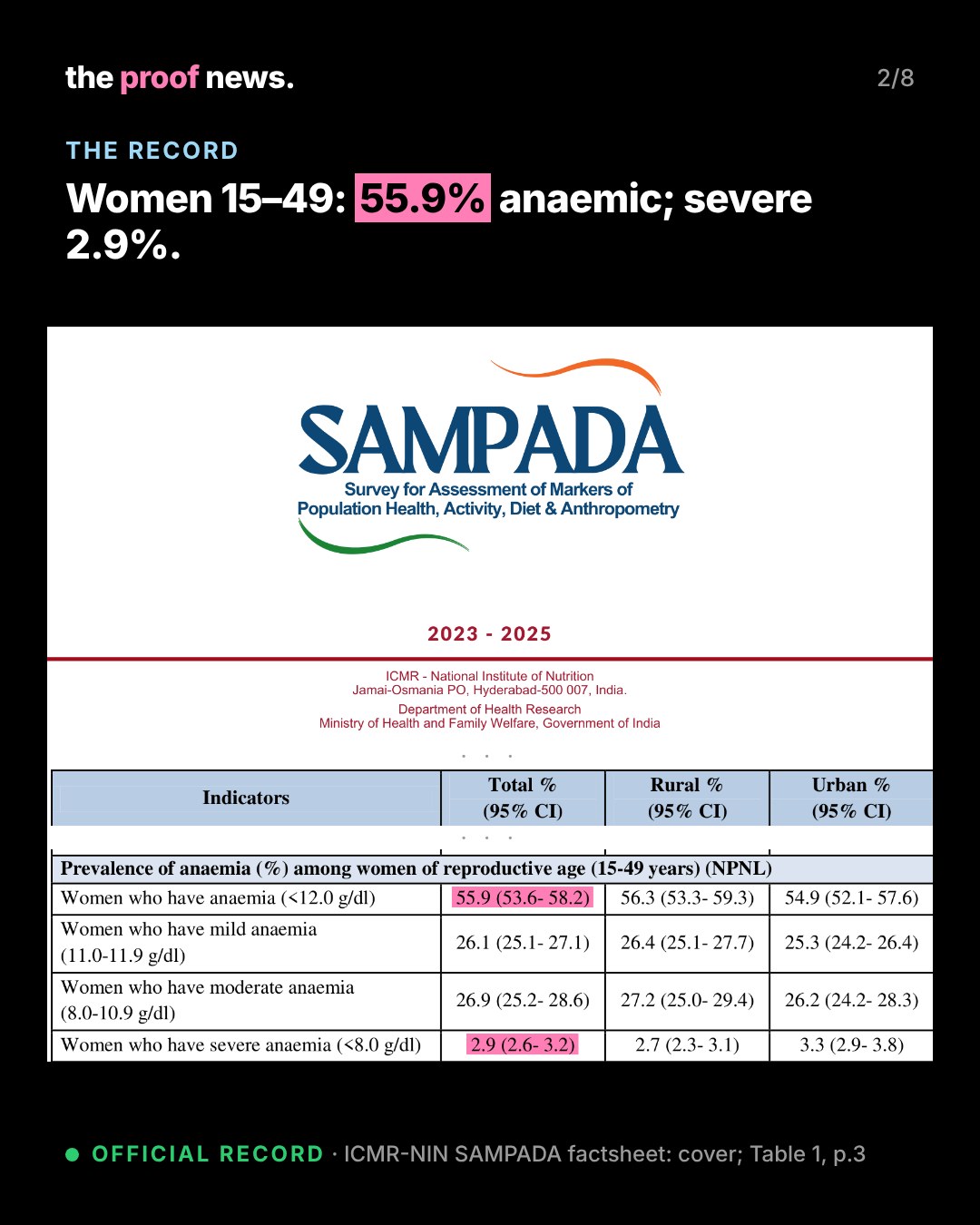
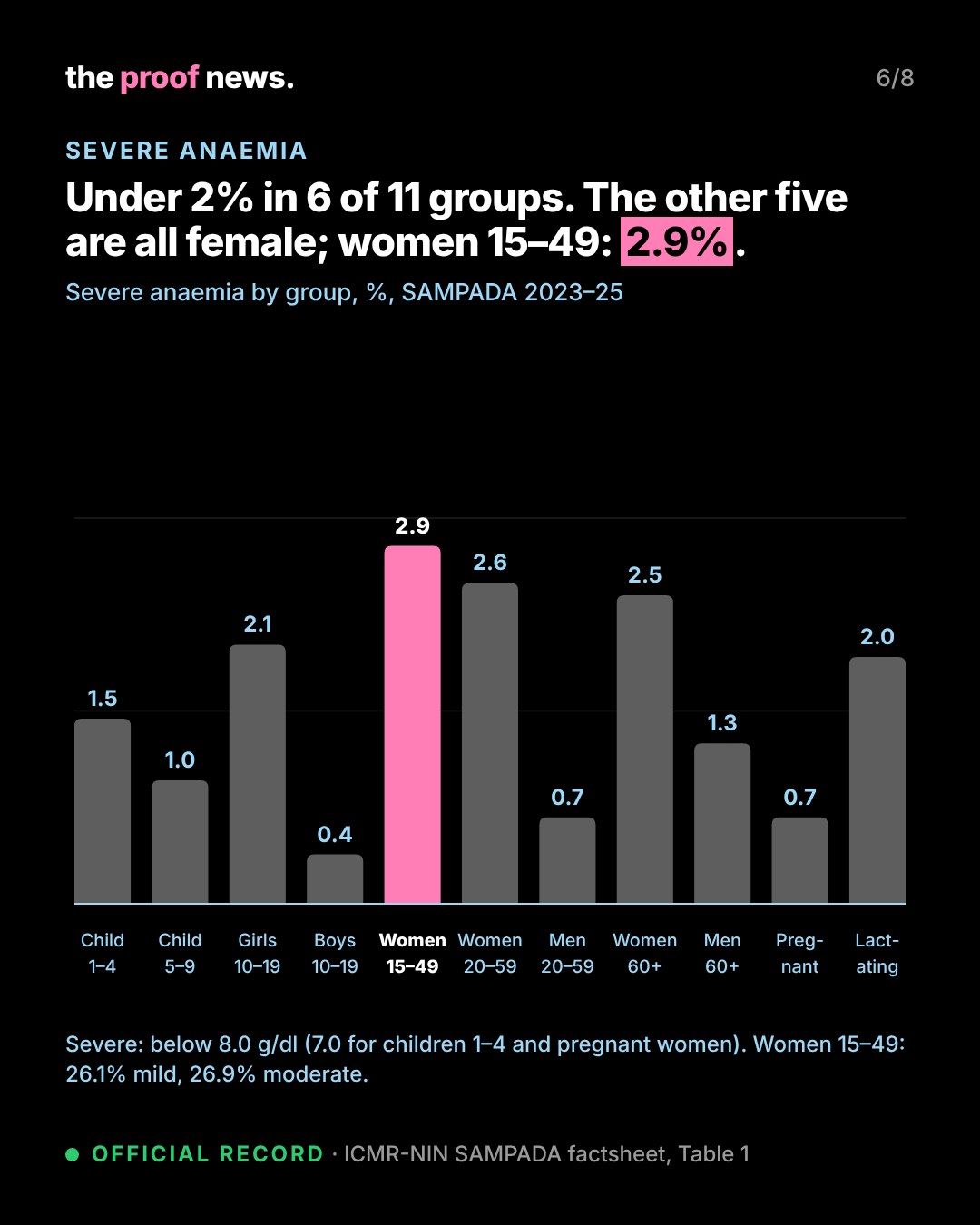
Official recordSeverity, women aged 15–49 (not pregnant or lactating): 26.1% mild, 26.9% moderate and 2.9% severe (below 8.0 g/dl). Severe anaemia is below 2% in six of the 11 groups in Table 1: children aged 12–59 months 1.5%, children aged 5–9 1.0%, adolescent boys 0.4%, men aged 20–59 0.7%, men aged 60 and over 1.3% and pregnant women 0.7%. The other five are all female groups: women 15–49 2.9%, women 20–59 2.6%, women 60 and over 2.5%, adolescent girls 2.1% and lactating women 2.0%.
CommentaryThe ministry's release says the findings show "an encouraging shift with overall lower prevalence of anaemia compared to previous surveys", and that "the difference is particularly large in case of children aged 12-59 months". Dr Rajiv Bahl, Secretary, Department of Health Research and Director General, ICMR, is quoted: "It is encouraging that prevalence of anaemia is lower in SAMPADA compared to previous national surveys." The fact sheets themselves describe the results as "an overall lower estimates compared with earlier national surveys" (p.4).
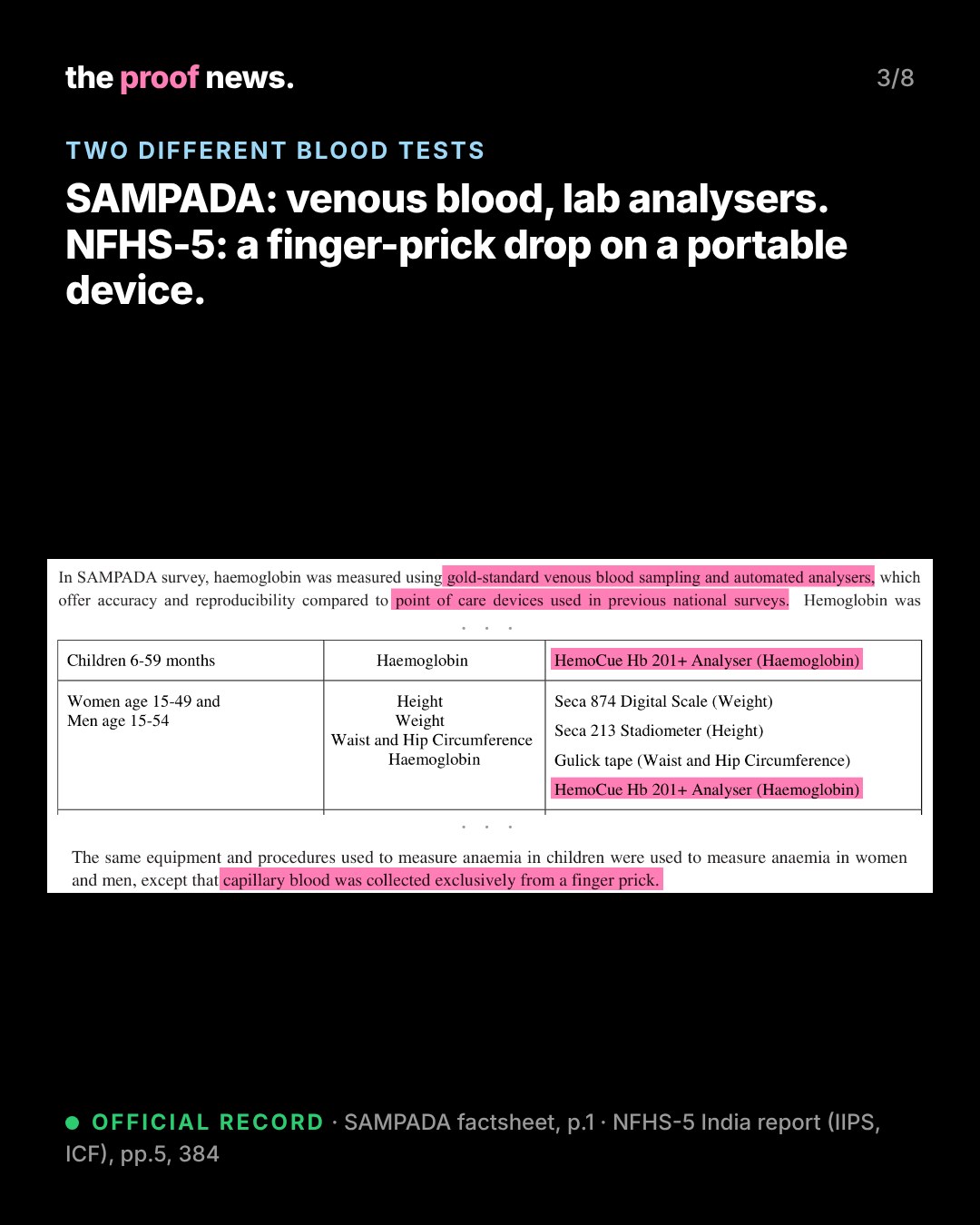
Official recordThe two surveys measured haemoglobin differently. SAMPADA used "gold-standard venous blood sampling and automated analysers, which offer accuracy and reproducibility compared to point of care devices used in previous national surveys", with haemoglobin measured within 4–6 hours in field laboratories (fact sheets, p.1). The National Family Health Survey 2019–21 (NFHS-5) drew "a drop of blood taken from a finger prick (or a heel prick for children age 6-11 months)" and tested it on site with "a battery-operated portable HemoCue Hb 201+ analyser" (NFHS-5 India report, p.5); for adults, "capillary blood was collected exclusively from a finger prick" (p.384). The fact sheets do not name NFHS-5, do not give an adjusted comparison with it, and do not say whether haemoglobin was adjusted for altitude or smoking; NFHS-5 adjusted for both.
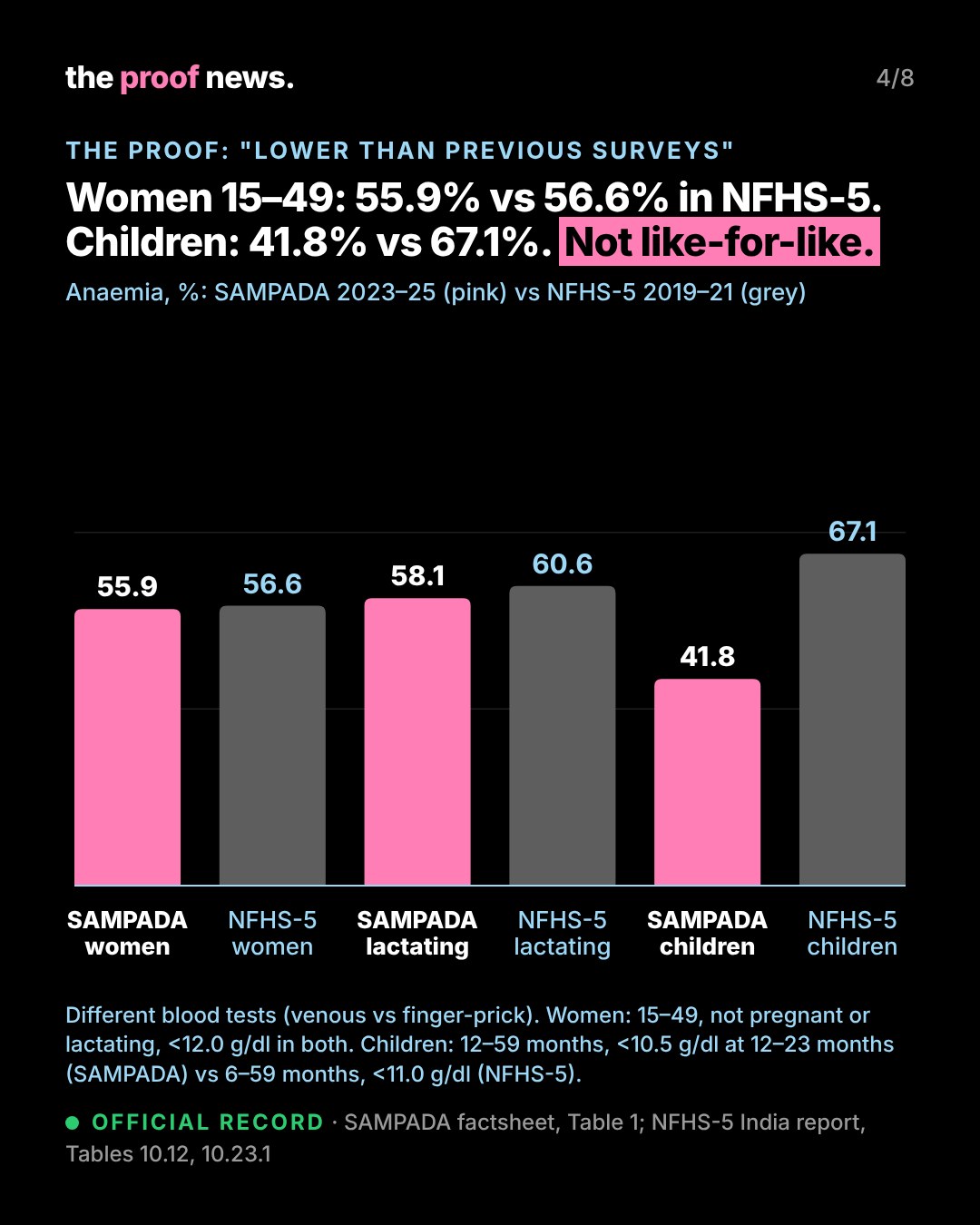
Verified factOur comparison of the published tables. The closest matching group is women aged 15–49 who are neither pregnant nor breastfeeding, with the same anaemia cut-off (below 12.0 g/dl) in both surveys: SAMPADA 55.9%, NFHS-5 56.6% (NFHS-5 Table 10.23.1). The difference is 0.7 percentage points, and NFHS-5's figure lies inside SAMPADA's own 95% confidence interval. Lactating women: SAMPADA 58.1%, NFHS-5 (breastfeeding) 60.6%. Severe anaemia in the matched group of women: 2.9% in SAMPADA, 2.8% in NFHS-5.
Verified factFor children the gap is large: SAMPADA 41.8% against NFHS-5's 67.1%. But three things differ at once. The blood test (venous against finger-prick). The age range: SAMPADA covers 12–59 months, NFHS-5 6–59 months; restricted to 12–59 months, NFHS-5 gives 65.9% (our recomputation from its Table 10.12, weighting each age band by the table's number of children). And the cut-off: SAMPADA uses WHO's 2024 thresholds, below 10.5 g/dl for children aged 12–23 months and below 11.0 g/dl for 24–59 months; NFHS-5 used below 11.0 g/dl for all children aged 6–59 months. The published tables do not allow the effect of each change to be separated. Pregnant women (SAMPADA 43.6%, NFHS-5 52.2%) are also measured against different cut-offs: SAMPADA uses trimester-specific thresholds, including below 10.5 g/dl in the second trimester; NFHS-5 used below 11.0 g/dl.
Verified factSo the comparison in the release is not like-for-like. For women, where the age group and cut-off match, the two surveys give nearly the same figure despite the different blood tests. The large fall the release highlights is in children, where the blood test, the age range and the cut-off all changed.
Official recordIron deficiency: among women 15–49, 26.7% have both anaemia and iron deficiency, against 55.9% with anaemia; among adolescent girls 26.9% against 46.3%; among children aged 12–59 months 16.4% against 41.8% (fact sheets, Table 3). The release says iron deficiency "accounts for about half of the anaemia cases in women, adolescent girls and children"; by these figures the share is 47.8% for women, 58.1% for adolescent girls and 39.2% for children (our computation).
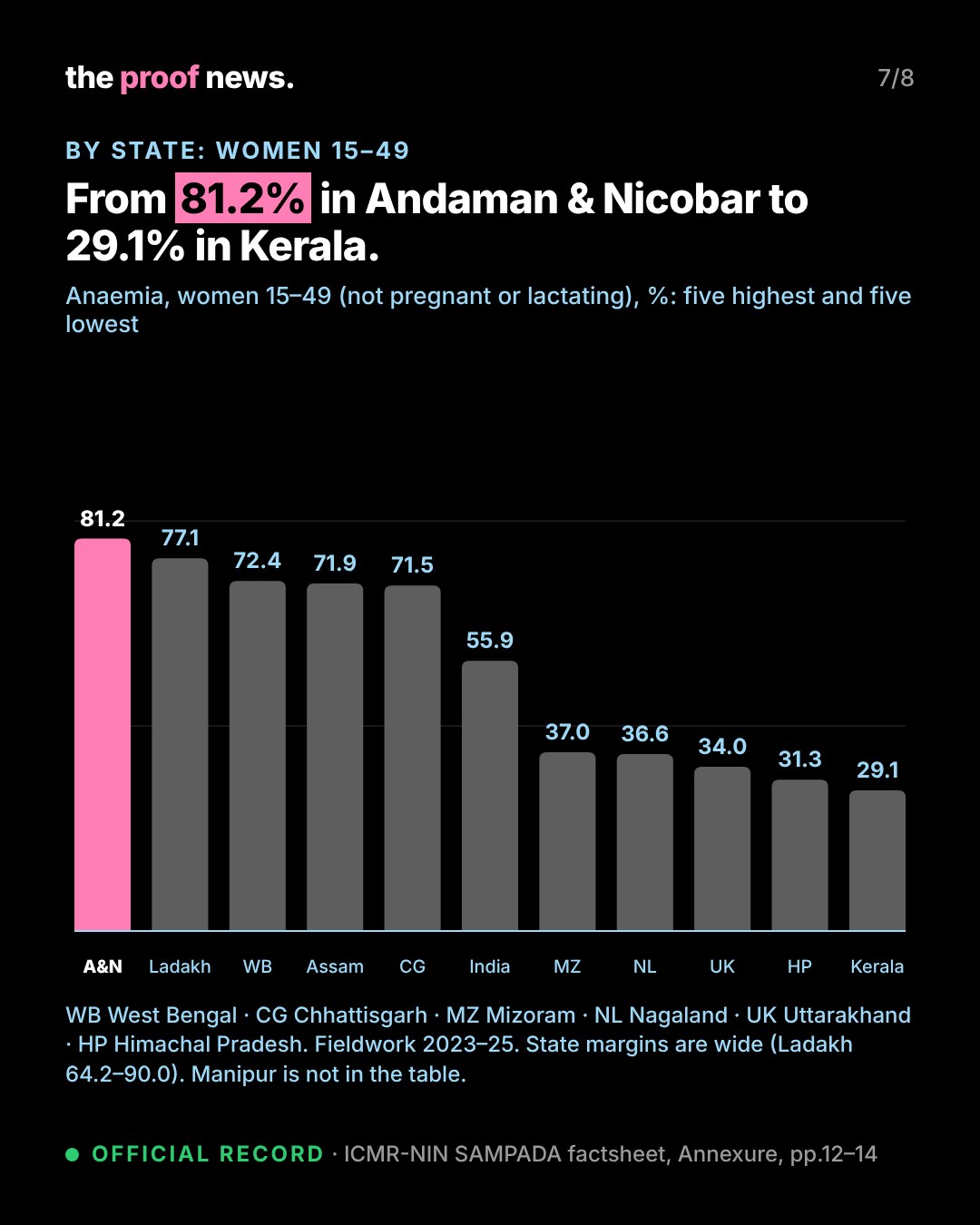
Official recordBy state (fact sheets, Annexure), anaemia among women 15–49 is highest in Andaman and Nicobar Islands (81.2%), Ladakh (77.1%), West Bengal (72.4%), Assam (71.9%), Chhattisgarh (71.5%) and Punjab (70.5%), and lowest in Kerala (29.1%), Himachal Pradesh (31.3%), Uttarakhand (34.0%), Nagaland (36.6%) and Mizoram (37.0%). Twelve of the 35 states and UTs in the table are at 60% or more. State estimates have wide confidence intervals in places (Ladakh 64.2–90.0, Gujarat 51.0–81.5). Manipur is not in the table; the fact sheets give no reason. Fieldwork ran from 2023 to 2025, so the figures span changes of government in several states.
ReportedThe NFHS-6 (2023–24) fact sheets, released on 29 May 2026, did not include anaemia, and haemoglobin was not tested in that round. Officials said anaemia estimates would come instead from an ICMR survey that "uses venous blood samples and is considered more accurate than the capillary blood sampling method employed in previous NFHS rounds" (India Today NE, 7 June). In a Rajya Sabha answer reported on 4 August, Minister of State for Health Anupriya Patel said the ministry had decided "after due deliberations" to adopt anaemia figures from "an independent survey conducted by Indian Council of Medical Research utilising the gold standard intravenous method for haemoglobin testing" (Business Standard). Congress president Mallikarjun Kharge had criticised the NFHS-6 findings in a post on X on 4 June, citing NFHS-5's figure that 57% of women aged 15–49 were anaemic (Hindusthan Samachar; Deccan Herald).
Verified factWe found no statement from opposition parties on the SAMPADA figures as of 25 November.
Official recordWhat to watch: the full SAMPADA report (the link on the ICMR-NIN site returned an error on 25 November), the method details it gives on altitude and smoking adjustment, any ICMR estimate that sets SAMPADA against NFHS-5 on the same basis, and the NFHS-6 national report.
The proof.
Every SAMPADA figure is read from the ICMR-NIN fact sheets (Table 1, Table 3 and the state Annexure) and every NFHS-5 figure from the NFHS-5 India report (Tables 10.12 and 10.23.1); check.py recomputes them, checks that mild, moderate and severe add up to each total, counts the groups with severe anaemia below 2%, and recomputes NFHS-5 for children aged 12–59 months (65.9%). The method wording of both surveys is quoted verbatim with page numbers.
- ICMR-NIN: Anaemia and Micronutrient Deficiencies Across the Life Course in India, SAMPADA 2023–25 fact sheets
- MoHFW release, PIB 2340476, 23 Nov 2026
- NFHS-5 (2019–21) India report, IIPS and ICF
- Business Standard: Govt explains why key indicators were missing from NFHS-6 fact sheets, 4 Aug 2026
- India Today NE: Why some data is missing from India's latest health survey, 7 Jun 2026
- Hindusthan Samachar: Kharge on NFHS-6, 4 Jun 2026
- Deccan Herald: Kharge's criticism of NFHS-6 and J. P. Nadda's reply, Jun 2026