Kerala High Court: "high time" for legislatures to consider lowering the juvenile age to 16
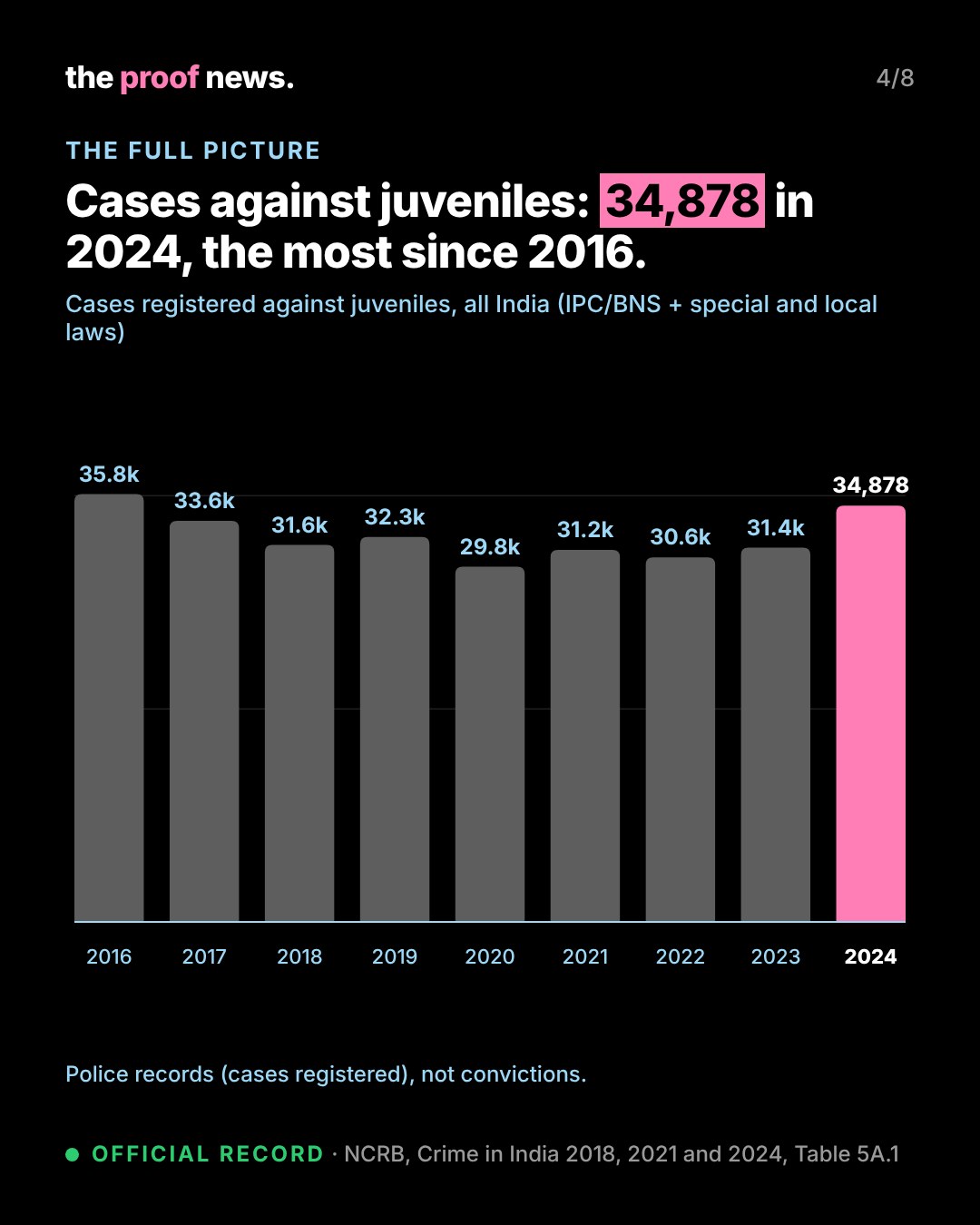
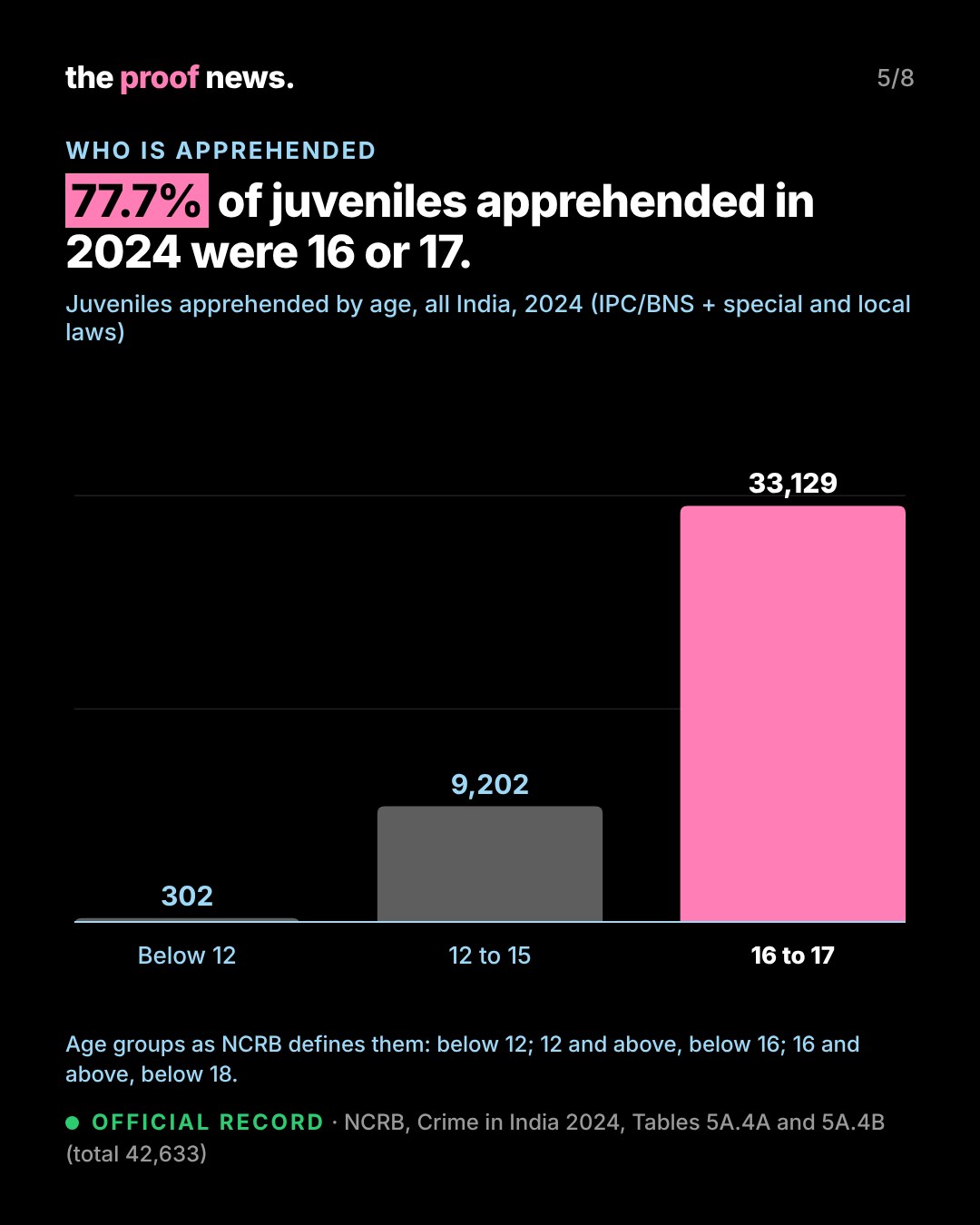
The observation came in an order on a petition about liquor being served to people under 23. It is not a direction. NCRB data show 34,878 cases against juveniles in 2024, with 77.7% of those apprehended aged 16 or 17.
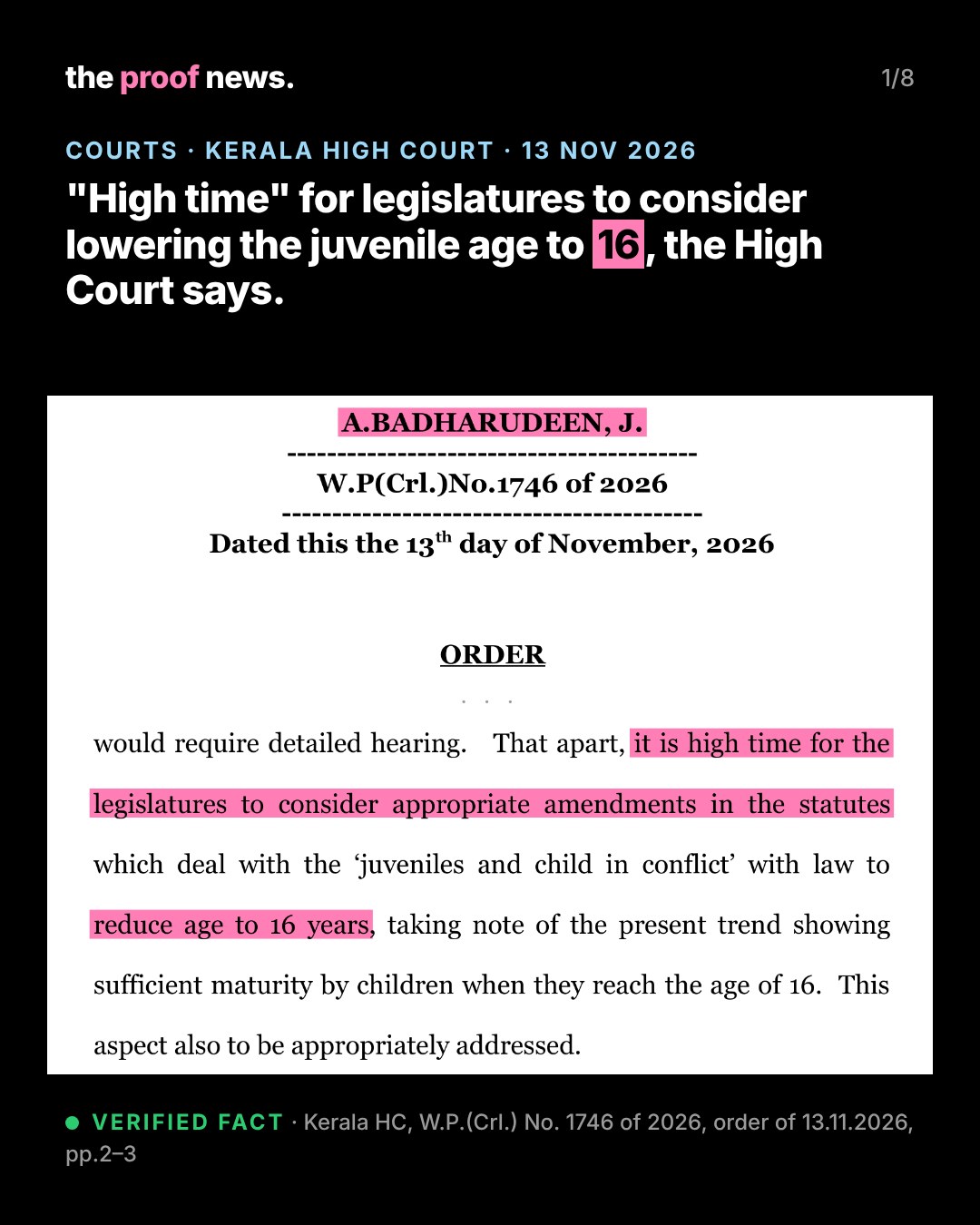
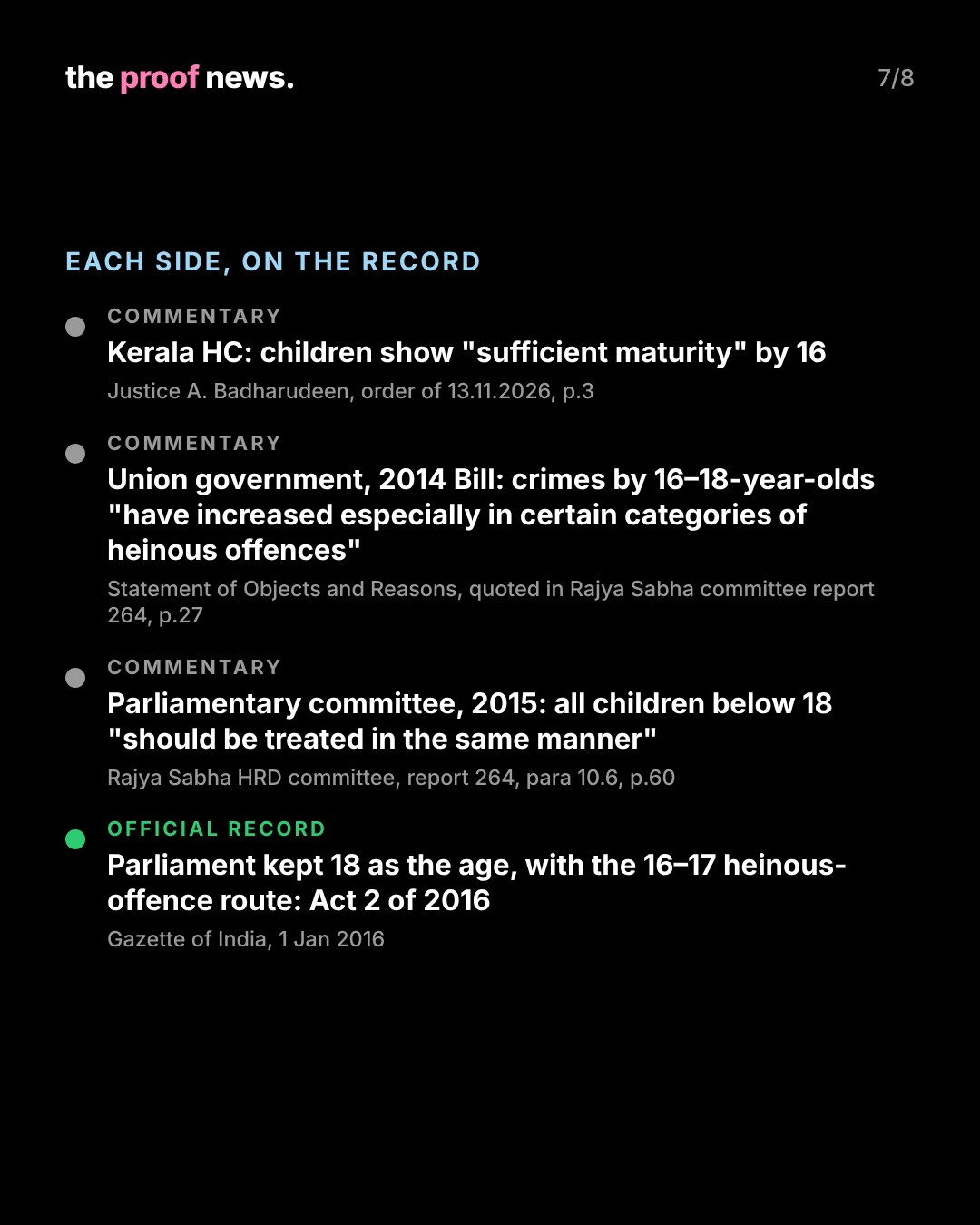
Verified factIn an order of 13 November 2026 in W.P.(Crl.) No. 1746 of 2026 (Vinod Vikraman Pillai v. State of Kerala & Others), Justice A. Badharudeen of the Kerala High Court wrote: "it is high time for the legislatures to consider appropriate amendments in the statutes which deal with the 'juveniles and child in conflict' with law to reduce age to 16 years, taking note of the present trend showing sufficient maturity by children when they reach the age of 16. This aspect also to be appropriately addressed." (p.3)
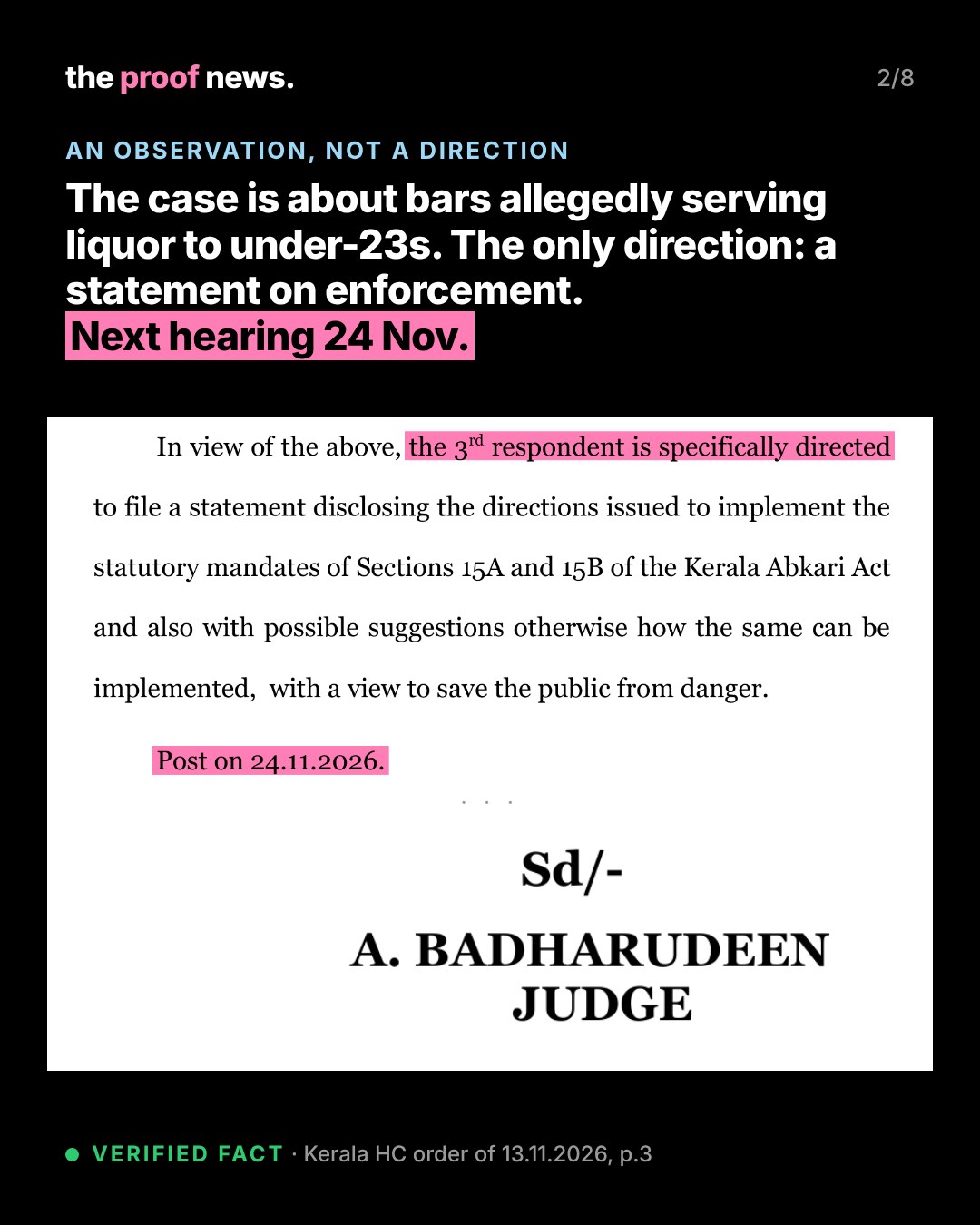
Verified factIt is an observation, not a binding direction. The order admits the writ petition and makes one direction: "the 3rd respondent is specifically directed to file a statement disclosing the directions issued to implement the statutory mandates of Sections 15A and 15B of the Kerala Abkari Act", with suggestions on how they can be implemented. The case is posted to 24.11.2026 (p.3).
ReportedThe 3rd respondent is the Excise Commissioner, according to reports of the order; the order itself refers only to "the 3rd respondent".
AllegationWhat prompted it. The petitioner's grievance, as recorded in the order, is non-compliance with Sections 15A and 15B of the Kerala Abkari Act which, according to the petitioner, prohibit the sale, service and consumption of liquor by persons below 23 years of age (para 2, p.2). The court said the petition required a detailed hearing, "Addressing the recent incidents showing that persons below 18 years of age caused fatal accidents, and motor vehicle mishap after consuming alcohol" (pp.2–3). The order names no incident and no child, and neither do we.
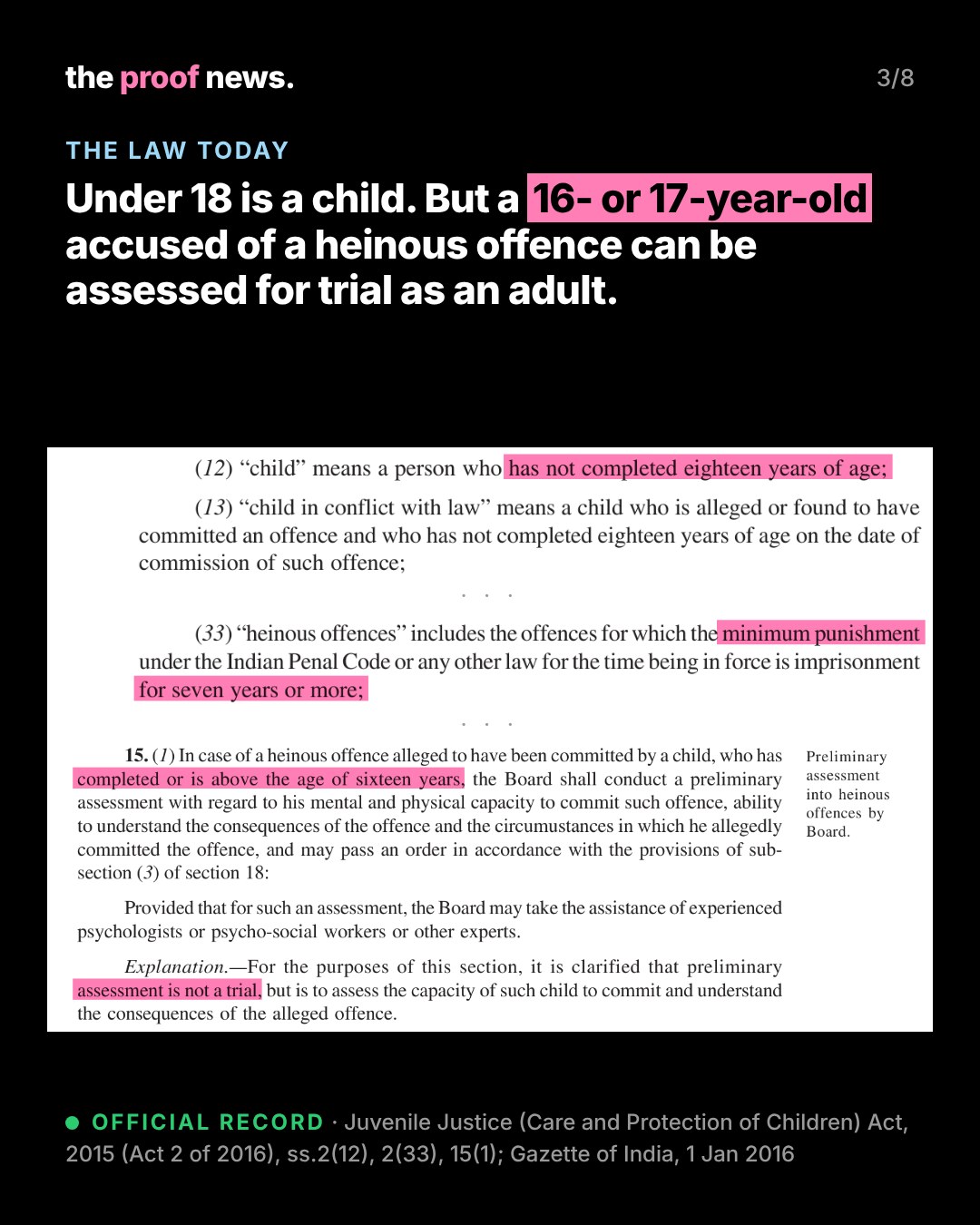
Official recordThe law today. Under the Juvenile Justice (Care and Protection of Children) Act, 2015 (Act 2 of 2016), a "child" is a person who "has not completed eighteen years of age" (s.2(12)). "Heinous offences" are those with a minimum punishment of seven years or more (s.2(33)). Where a child aged 16 or above is alleged to have committed a heinous offence, the Juvenile Justice Board conducts a preliminary assessment of the child's mental and physical capacity, ability to understand the consequences and the circumstances (s.15(1)); "preliminary assessment is not a trial". If the Board finds a need for trial as an adult it may transfer the case to a Children's Court (s.18(3)), which decides whether to try the child as an adult (s.19(1)). No child in conflict with law can be sentenced to death or to life imprisonment without the possibility of release (s.21). The 2021 Amendment Act (Act 23 of 2021) did not change these sections.
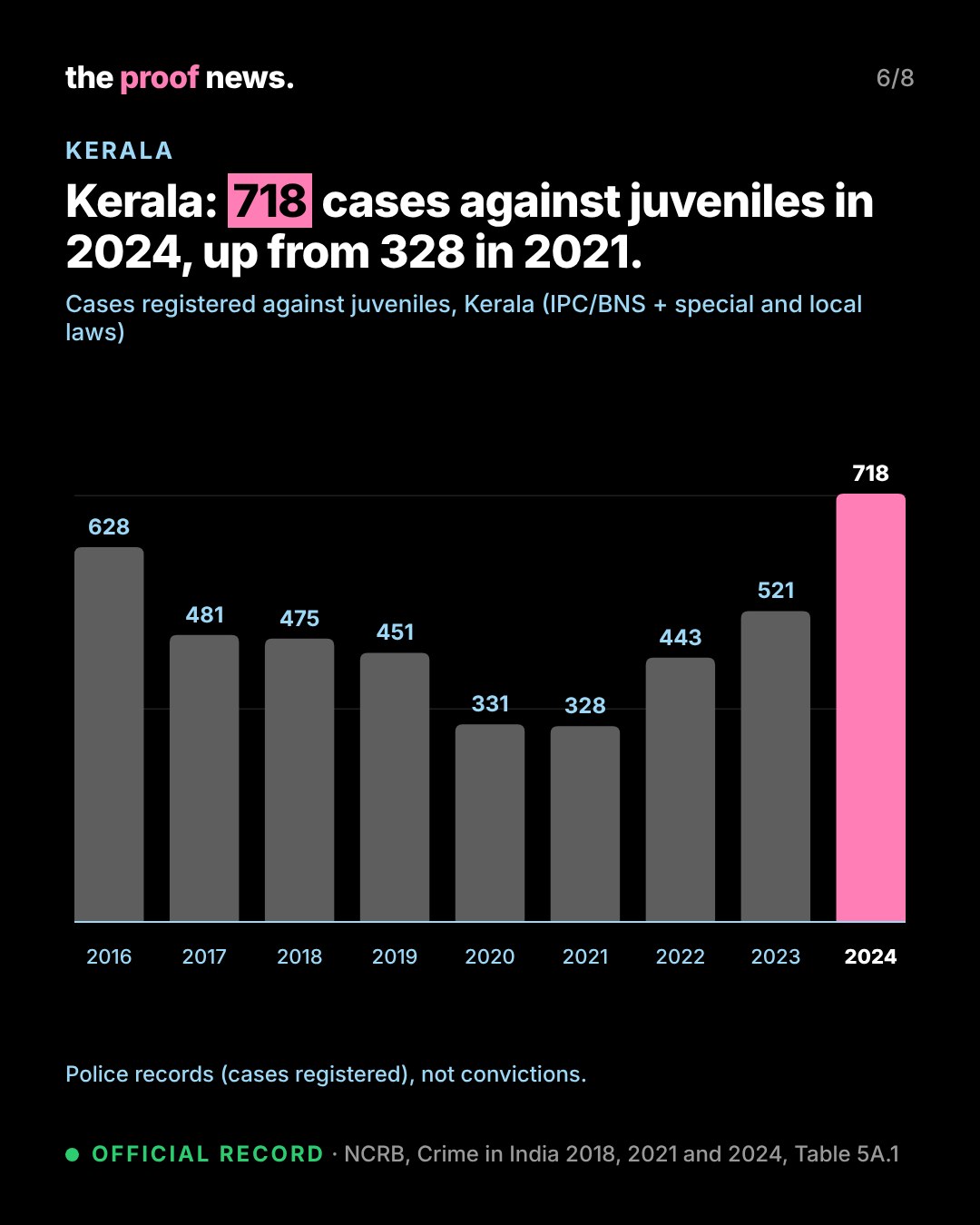
Official recordThe data. Cases registered against juveniles, all India (IPC/BNS and special and local laws): 35,849 (2016), 33,606 (2017), 31,591 (2018), 32,269 (2019), 29,768 (2020), 31,170 (2021), 30,555 (2022), 31,365 (2023) and 34,878 (2024), up 11.2% on 2023 (NCRB, Crime in India, Table 5A.1, from the 2018, 2021 and 2024 editions). In Kerala: 628, 481, 475, 451, 331, 328, 443, 521 and 718 over the same years; 718 is up 37.8% on 2023.
Official recordOf the 42,633 juveniles apprehended in 2024, 33,129 (77.7%) were aged 16 to below 18, 9,202 (21.6%) were 12 to below 16, and 302 (0.7%) were below 12 (NCRB, Crime in India 2024, Tables 5A.4A and 5A.4B). Under IPC/BNS, 1,120 murder cases and 1,067 rape cases were registered against juveniles in 2024 (Table 5A.4A).
Official recordCaveats. NCRB figures are police records: cases registered and juveniles apprehended, not convictions. NCRB says the data are as provided by States and UTs and that States may not be compared purely on crime figures. The 2024 figures combine IPC and BNS heads. Each year's figure is taken from the latest Crime in India edition that reports it.
CommentaryThe earlier debate, on the record. When the 2014 Bill was introduced, its Statement of Objects and Reasons said NCRB data showed crimes by 16–18-year-olds "have increased especially in certain categories of heinous offences". The Rajya Sabha Standing Committee on Human Resource Development disagreed (264th report, February 2015): it said NCRB data were based on FIRs, not convictions, and that "all children below 18 years are amenable and should be treated in the same manner" (paras 3.12–3.13, 10.6). Parliament passed the Act with 18 as the age and the separate procedure for 16- and 17-year-olds accused of heinous offences.
CommentaryWe found no response yet from the Union government or the Kerala government to the observation.
The proof.
The observation is quoted verbatim from the order, with page. The law is quoted from the Gazette text of the Act, checked against the 2021 amendment. Every number is recomputed from NCRB's own tables by our check script, including the 77.7% share and the year-on-year changes.
- Kerala High Court, W.P.(Crl.) No. 1746 of 2026, order of 13.11.2026 (PDF, as reposted)
- Juvenile Justice (Care and Protection of Children) Act, 2015, Gazette of India Extraordinary, 1 Jan 2016 (PDF)
- Juvenile Justice (Care and Protection of Children) Amendment Act, 2021, Gazette of India (PDF)
- NCRB, Crime in India 2024, Volume II (PDF)
- NCRB, Crime in India 2021, Volume 1 (PDF)
- NCRB, Crime in India 2018, Volume 1 (PDF)
- Rajya Sabha Department-related Standing Committee on HRD, 264th report on the Juvenile Justice Bill, 2014 (PDF)