States budget about ₹4 lakh crore for cash transfers in 2026-27, PRS report finds
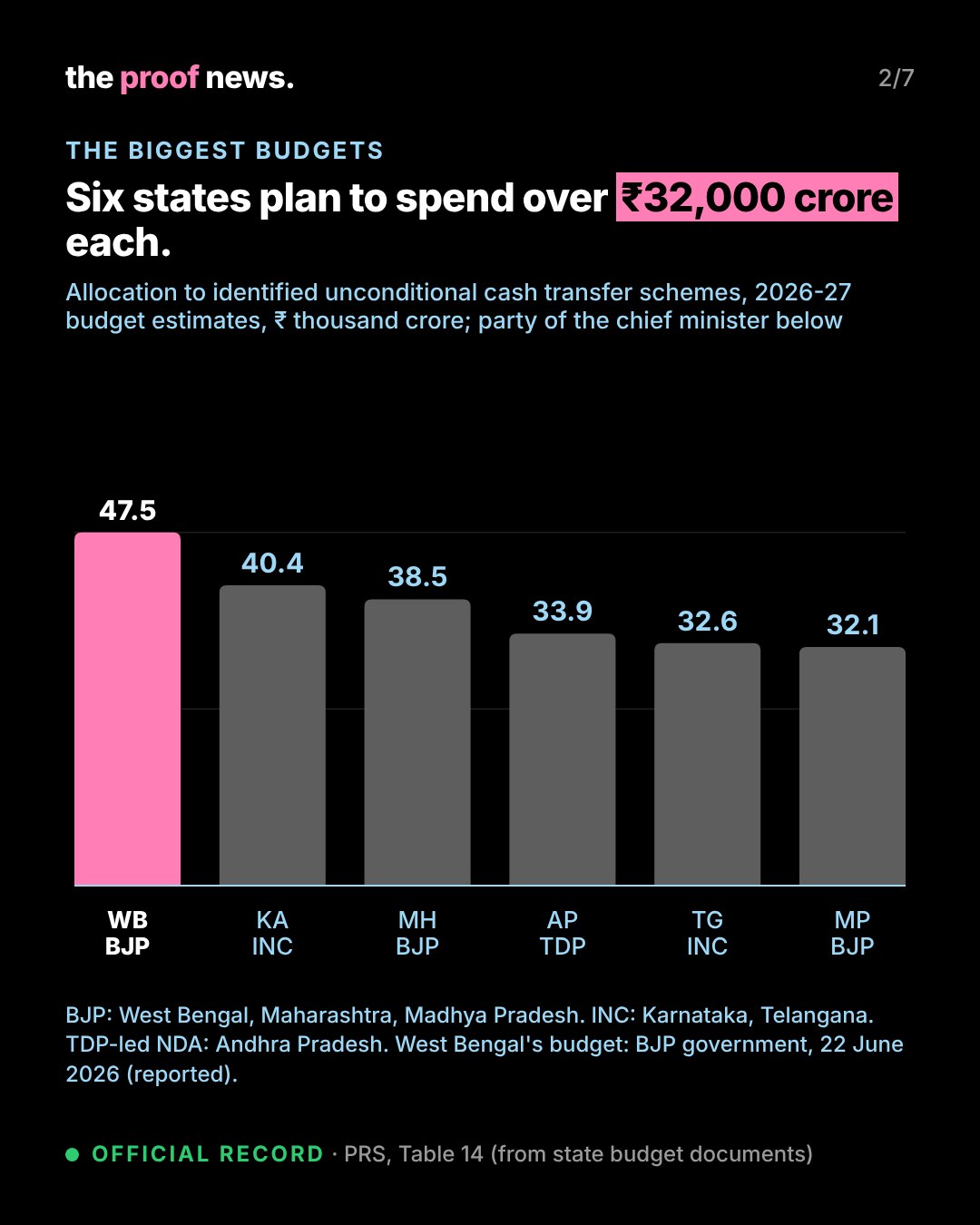
PRS Legislative Research puts states' allocations to unconditional cash transfer schemes at about 1% of GDP, up from 0.6% in 2022-23. West Bengal, Karnataka, Maharashtra, Andhra Pradesh, Telangana and Madhya Pradesh have the biggest budgets.
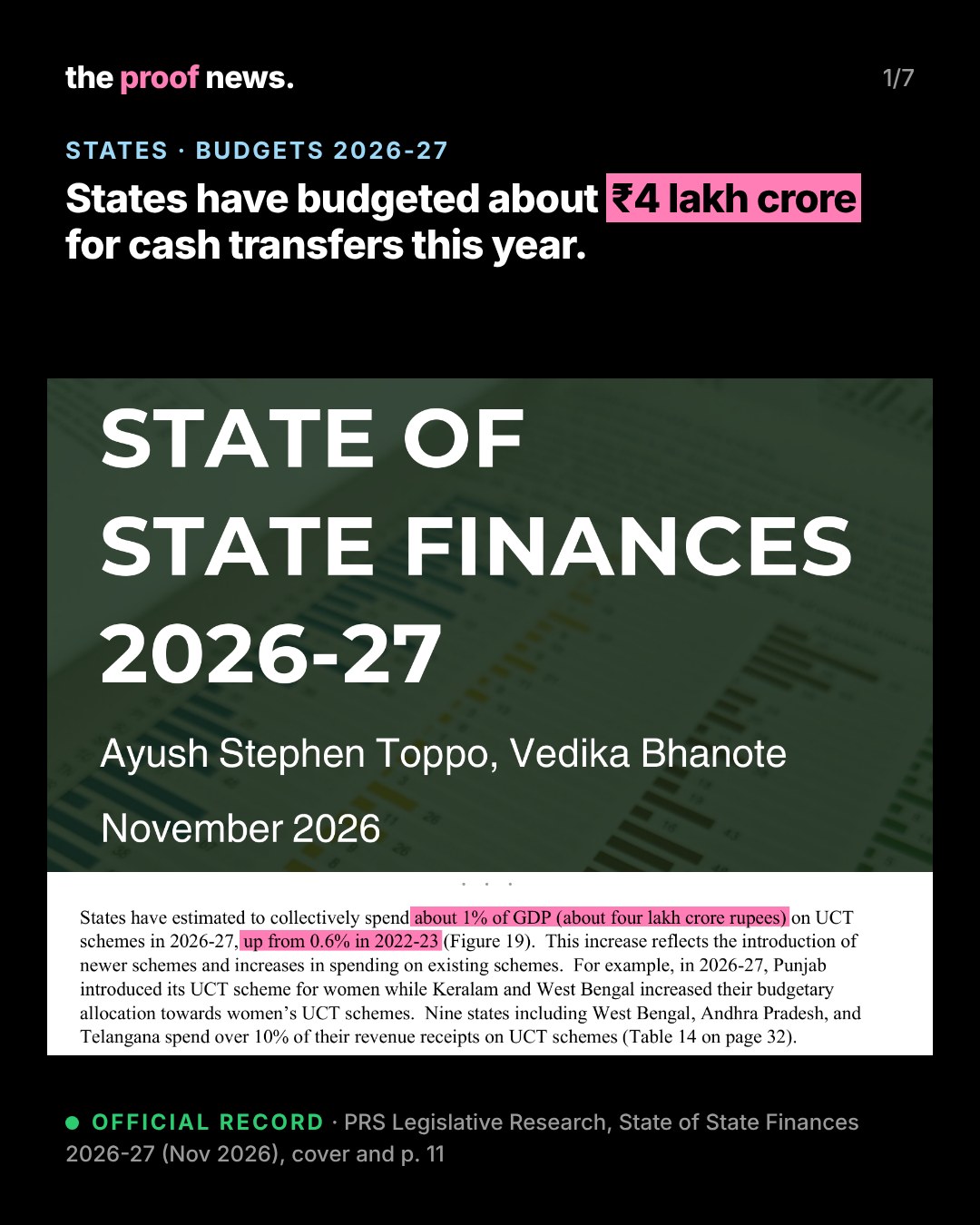
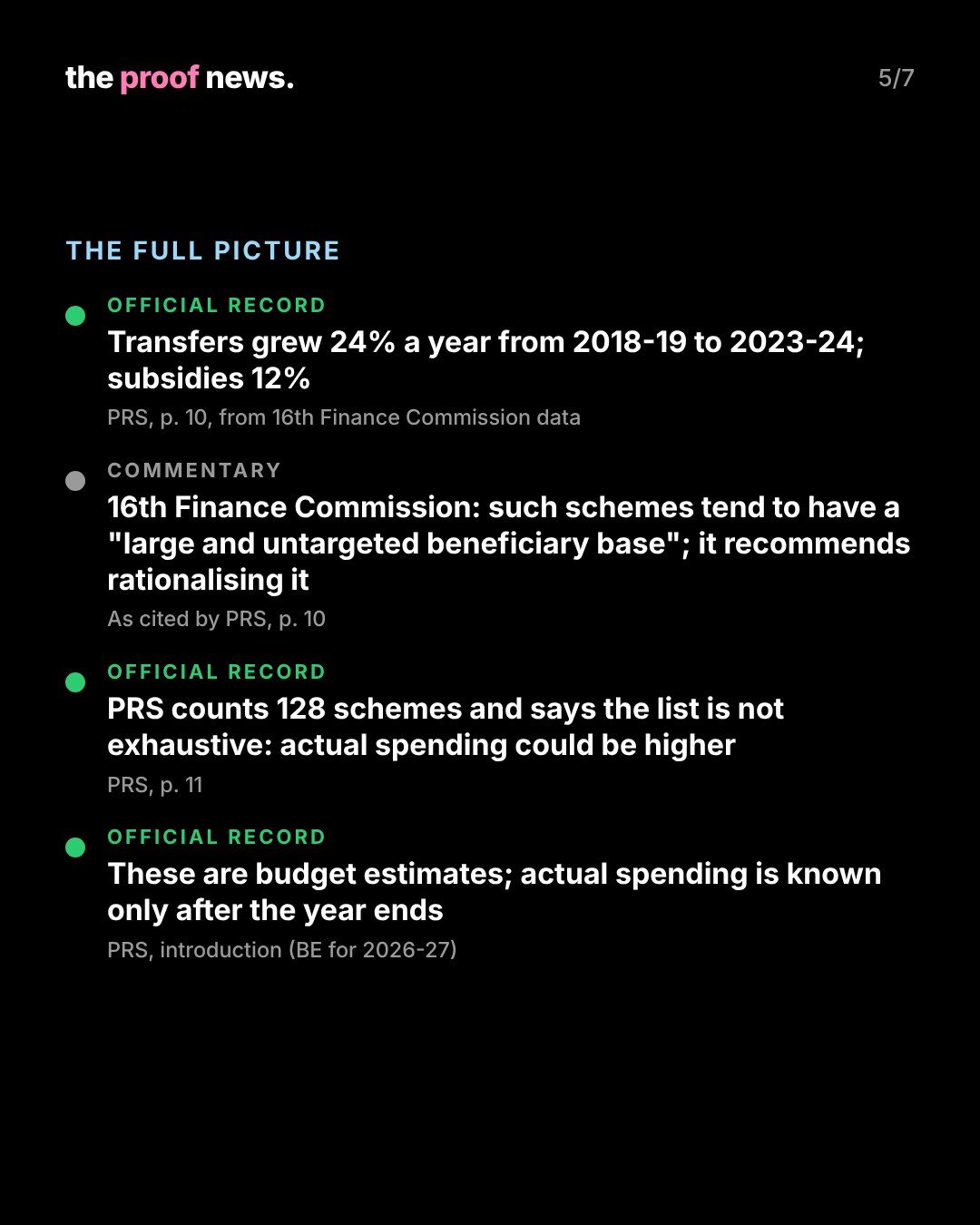
Official recordPRS Legislative Research's State of State Finances 2026-27 (November 2026) estimates that states will "collectively spend about 1% of GDP (about four lakh crore rupees) on UCT schemes in 2026-27, up from 0.6% in 2022-23" (page 11). UCTs are unconditional cash transfers to women, farmers, youth and social security pension beneficiaries such as the elderly, widows and persons with disabilities. The analysis draws on 128 identified schemes; PRS says the list is not exhaustive, so actual spending could be higher. The figures are 2026-27 budget estimates.
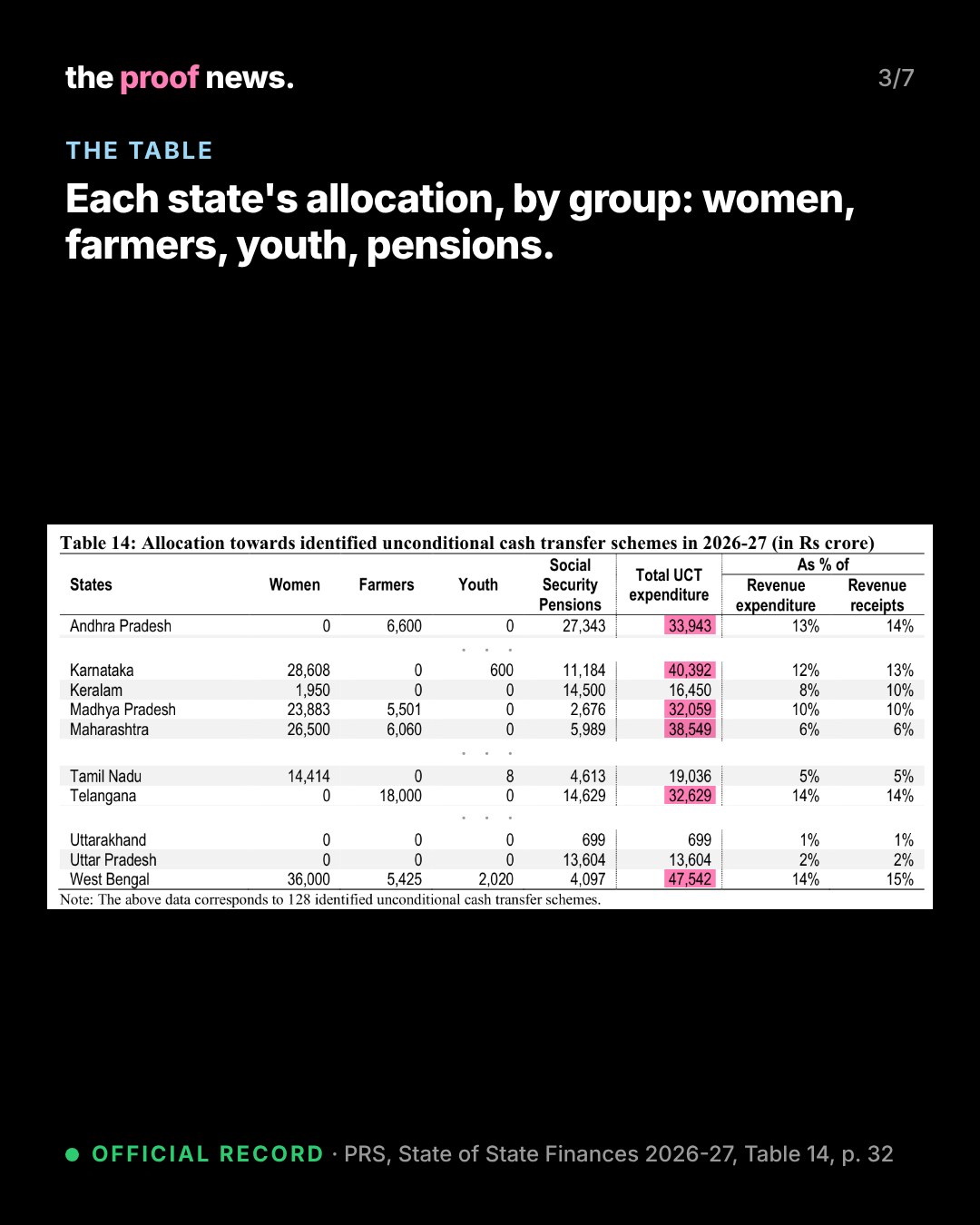
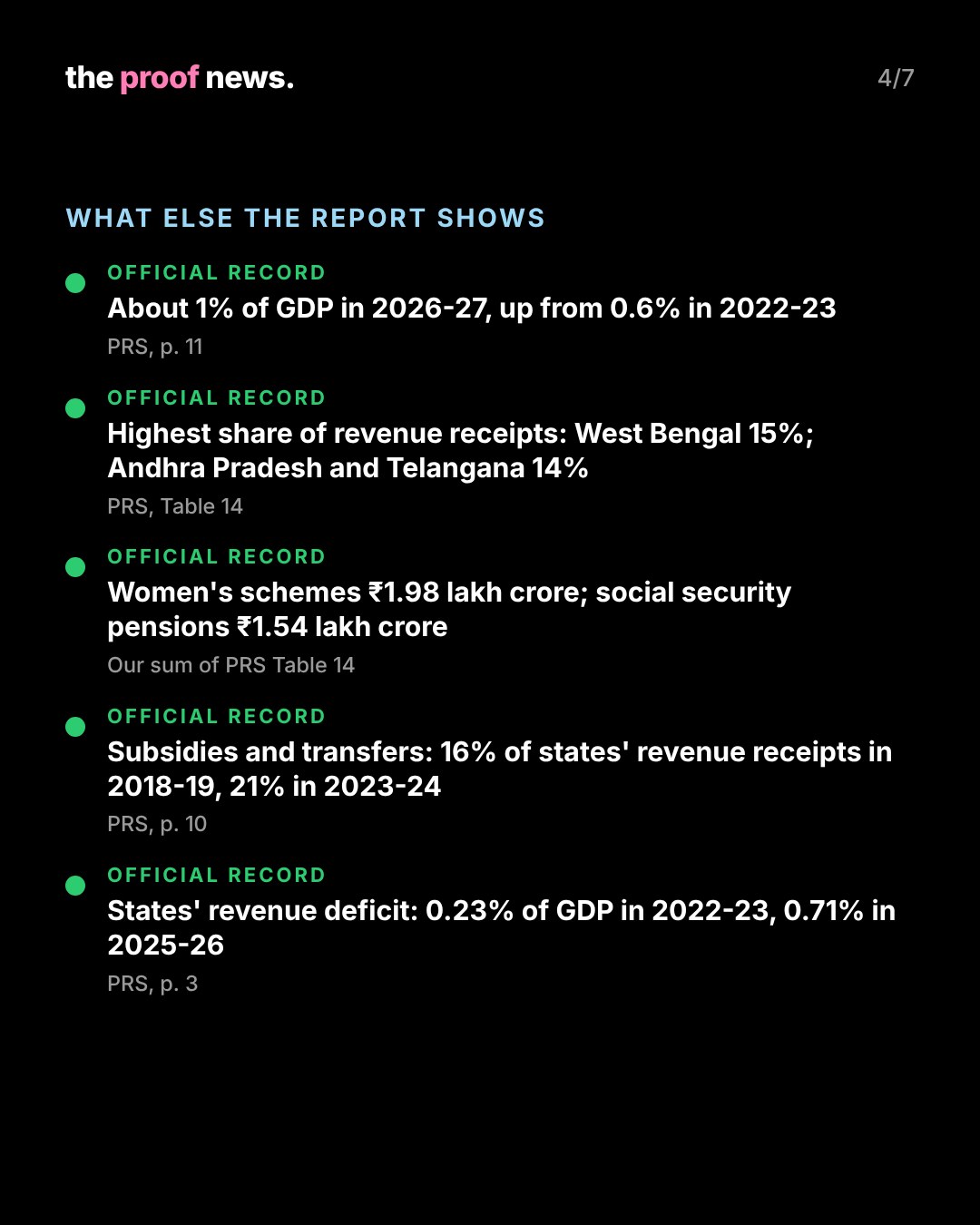
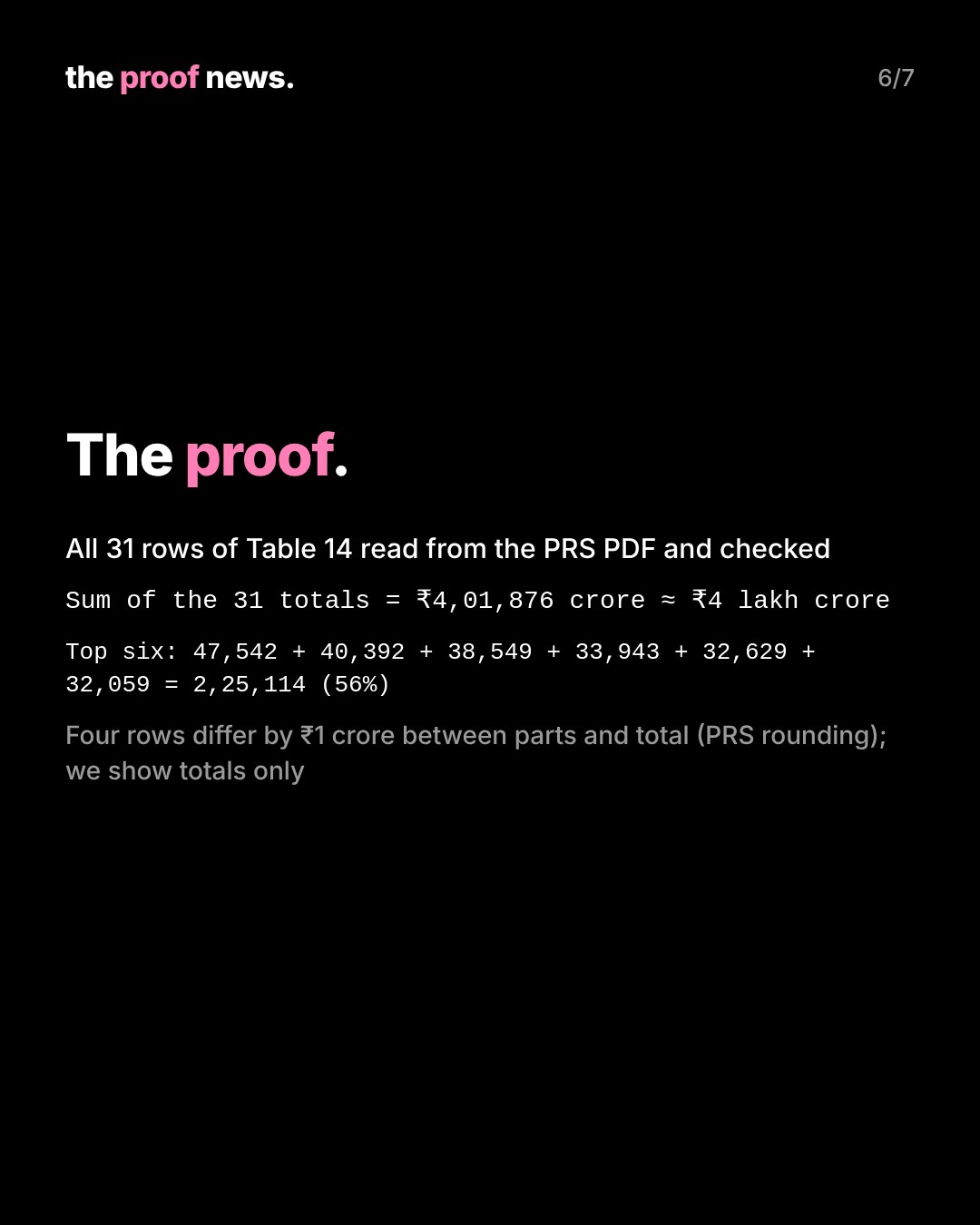
Official recordTable 14 of the report lists each state's allocation. The largest: West Bengal ₹47,542 crore, Karnataka ₹40,392 crore, Maharashtra ₹38,549 crore, Andhra Pradesh ₹33,943 crore, Telangana ₹32,629 crore and Madhya Pradesh ₹32,059 crore. Together these six are ₹2,25,114 crore, 56% of the table's total of ₹4,01,876 crore (our sums). As a share of revenue receipts, West Bengal is highest at 15%, followed by Andhra Pradesh and Telangana at 14%.
Verified factWho governs the six: the BJP in West Bengal, Maharashtra and Madhya Pradesh; the Congress in Karnataka and Telangana; the TDP-led NDA in Andhra Pradesh.
ReportedWest Bengal's 2026-27 budget was presented by the BJP government on 22 June 2026, with ₹36,000 crore for the Annapurna Yojana, which replaced the previous TMC government's Lakshmir Bhandar scheme, according to reports. PRS lists ₹36,000 crore for women's transfers in West Bengal.
Official recordBy group, across all states (our sum of Table 14): women's schemes ₹1,98,117 crore, social security pensions ₹1,54,433 crore, farmers ₹46,194 crore and youth ₹3,132 crore.
Official recordThe wider picture in the report: spending on subsidies and transfers rose from 16% of states' revenue receipts in 2018-19 to 21% in 2023-24, with transfers growing 24% a year and subsidies 12% (page 10, from 16th Finance Commission data). States' combined revenue deficit widened from 0.23% of GDP in 2022-23 to 0.61% in 2024-25 and 0.71% in 2025-26 (page 3).
CommentaryThe report cites the 16th Finance Commission's view that unconditional transfer schemes "tend to have a large and untargeted beneficiary base" and are inefficient and a large fiscal burden, and its recommendation that governments rationalise the beneficiary base (page 10). The report also notes that transfers supplement beneficiaries' incomes without changing market prices.
UnverifiedWe found no statement from any state government or party on the report by the evening of 18 November. Caveats: four rows of Table 14 differ by ₹1 crore between parts and totals (rounding); we use totals.
The proof.
proofs/e18-prs-cash-transfers/dossier.md