Air passenger prices up 35.52% in a year, the government's service price index shows
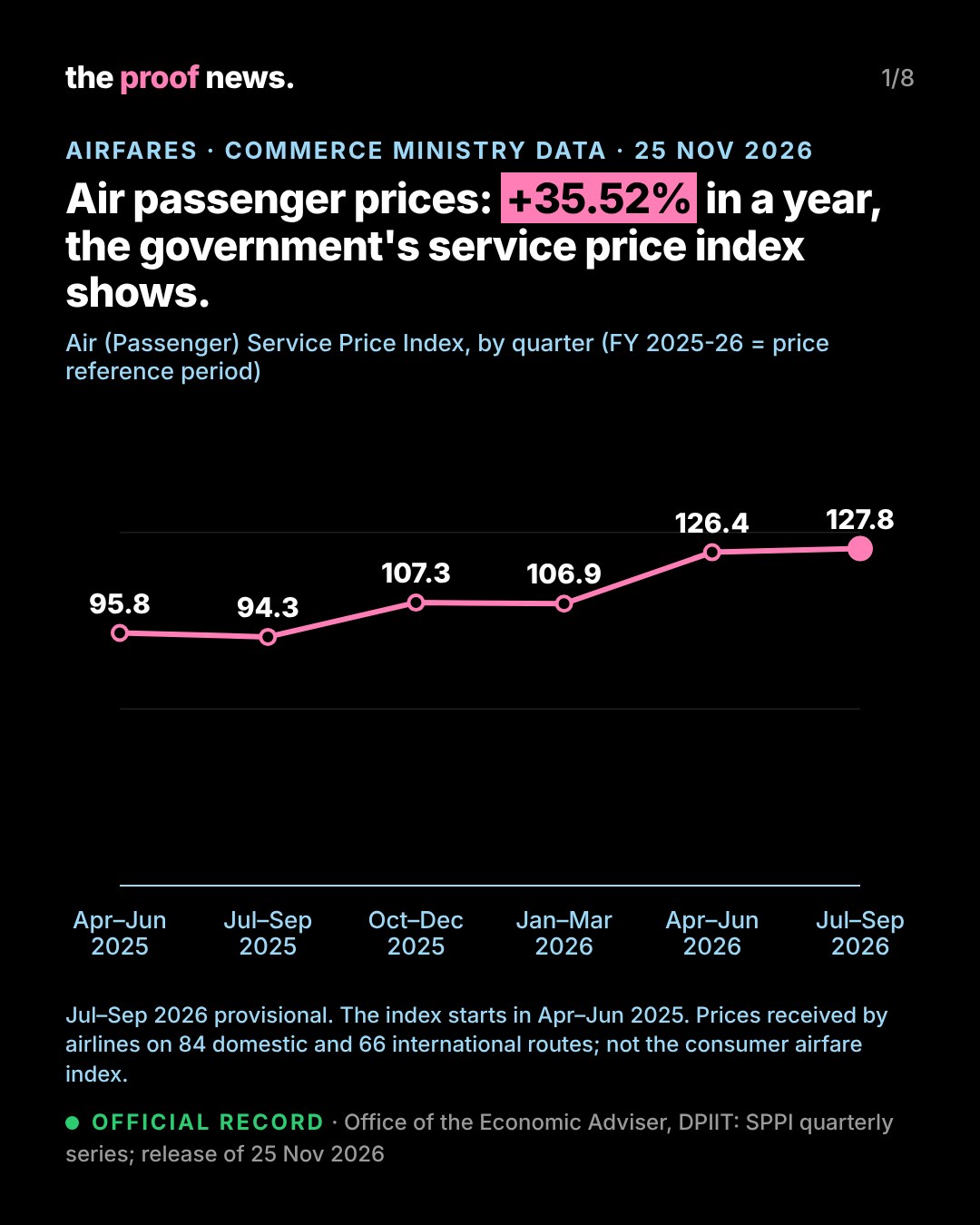
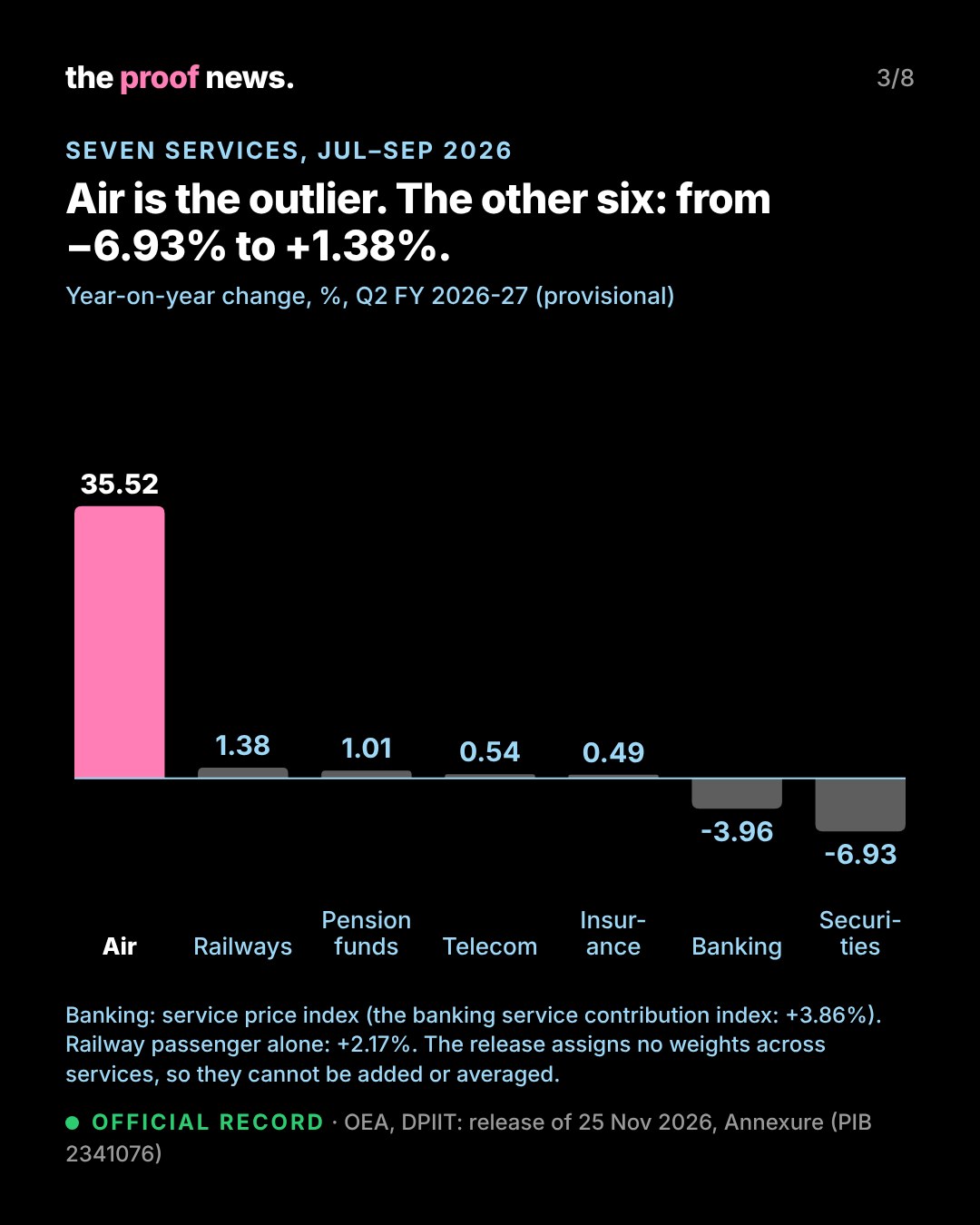
The Air (Passenger) Service Price Index rose 35.52% year on year in July–September 2026, against −6.93% to +1.38% for the other six services in the same release. Most of the rise came in two quarters. It is a producer price, not the consumer airfare index, and the release does not explain the rise.
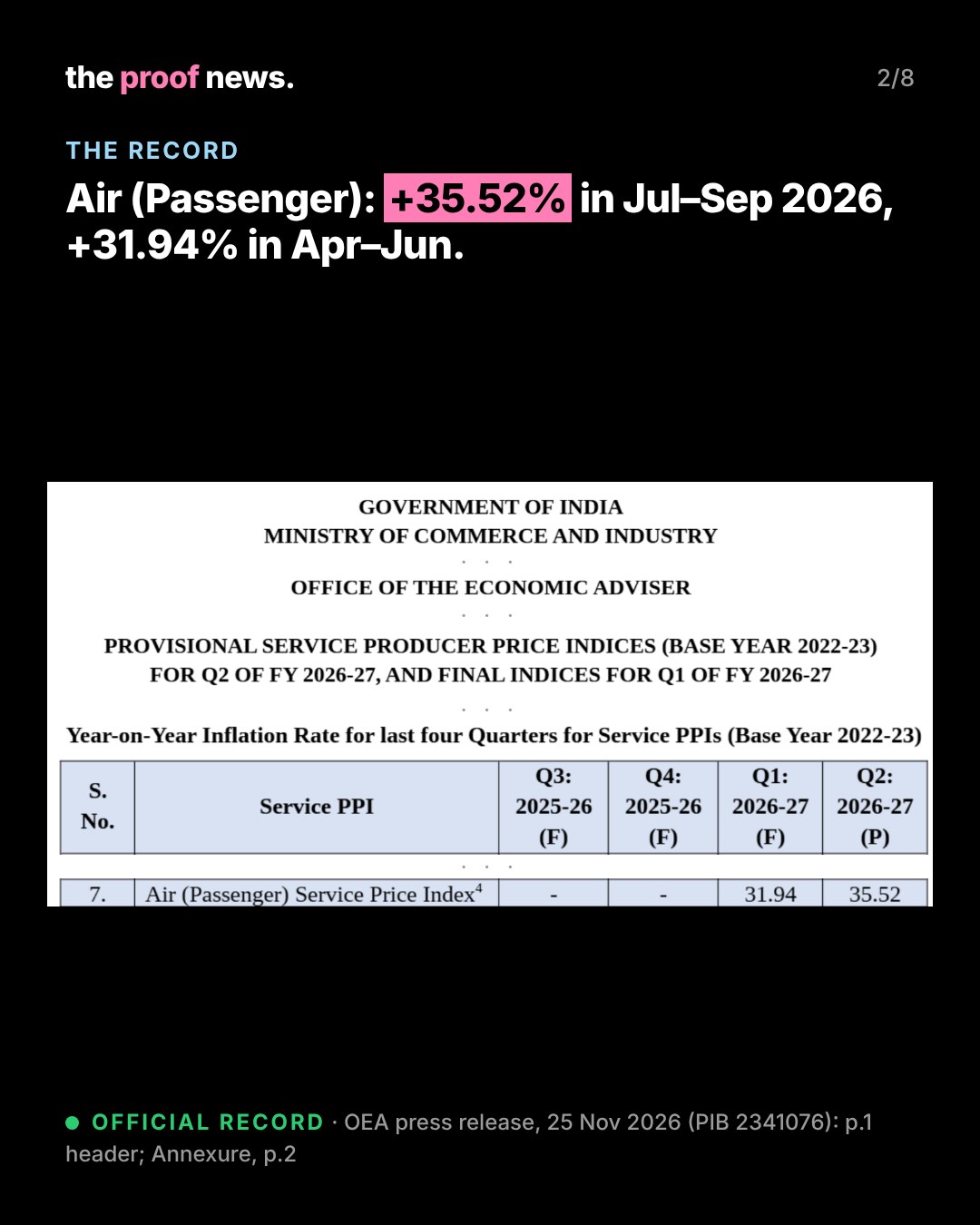
Official recordThe Office of the Economic Adviser (OEA), Department for Promotion of Industry and Internal Trade, Ministry of Commerce and Industry, released provisional Service Producer Price Indices (base year 2022-23) for the second quarter (July–September) of FY 2026-27 and final indices for the first quarter (April–June) on 25 November 2026 (PIB release ID 2341076). The Air (Passenger) Service Price Index was 127.8 in July–September (provisional), up from 126.4 in April–June (final). Its year-on-year inflation rate was 35.52% in July–September and 31.94% in April–June.
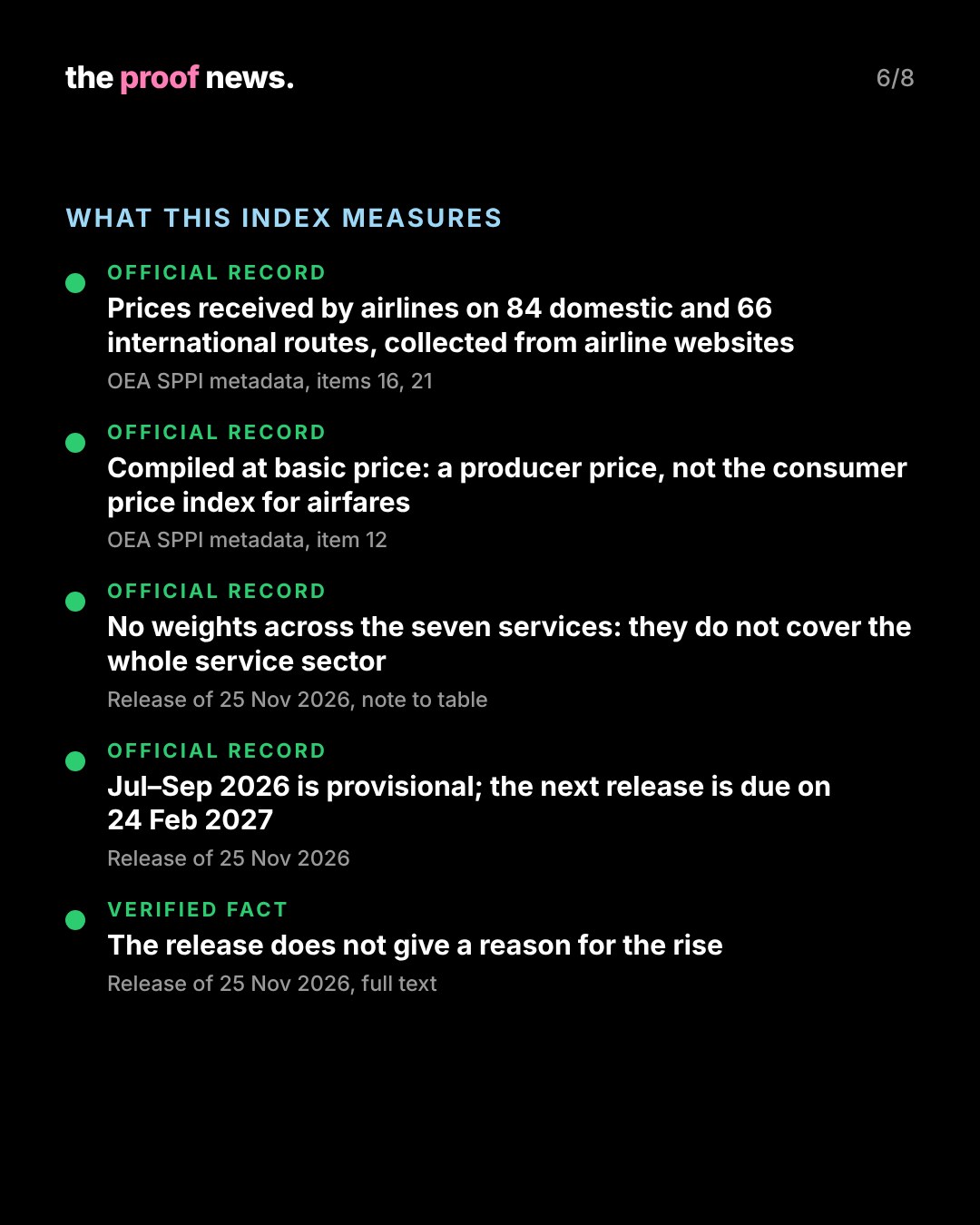
Official recordThe other six services in the release, year-on-year change in July–September 2026: railways +1.38% (freight +0.99%, passenger +2.17%), management of pension funds +1.01%, telecom +0.54%, insurance +0.49%, banking service price index −3.96% (banking service contribution index +3.86%) and securities transactions −6.93%. The release says weights have not been assigned across these services "as these services do not cover the entire service sector", so the seven cannot be added or averaged.
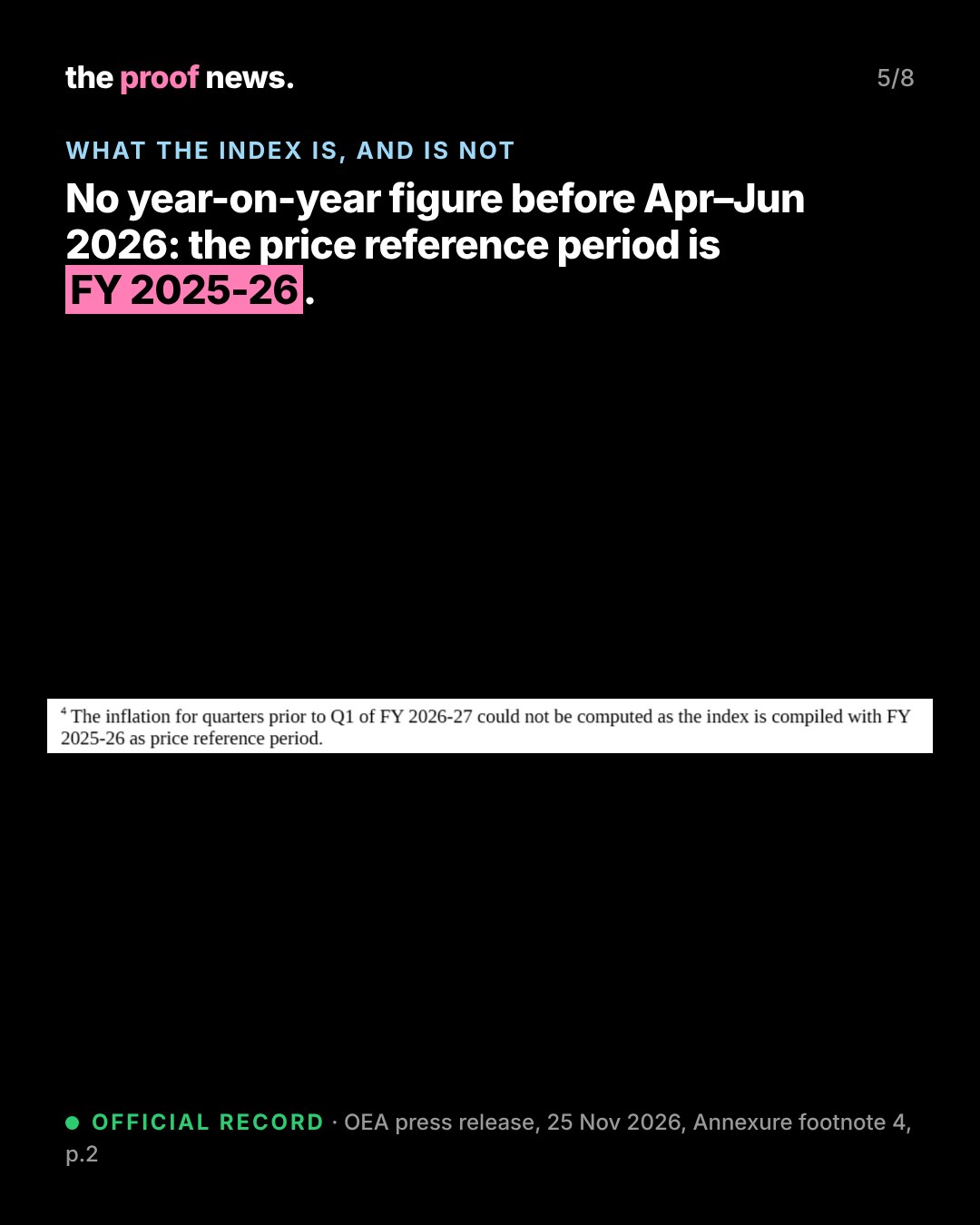
Official recordThe air index is newer than the others. The release says it "is compiled with FY 2022-23 as weight reference period and FY 2025-26 as price reference period", and that inflation "for quarters prior to Q1 of FY 2026-27 could not be computed". The OEA's quarterly series gives the air index from April–June 2025: 95.8, 94.3 (July–September 2025), 107.3 (October–December 2025), 106.9 (January–March 2026), 126.4 (April–June 2026) and 127.8 (July–September 2026).
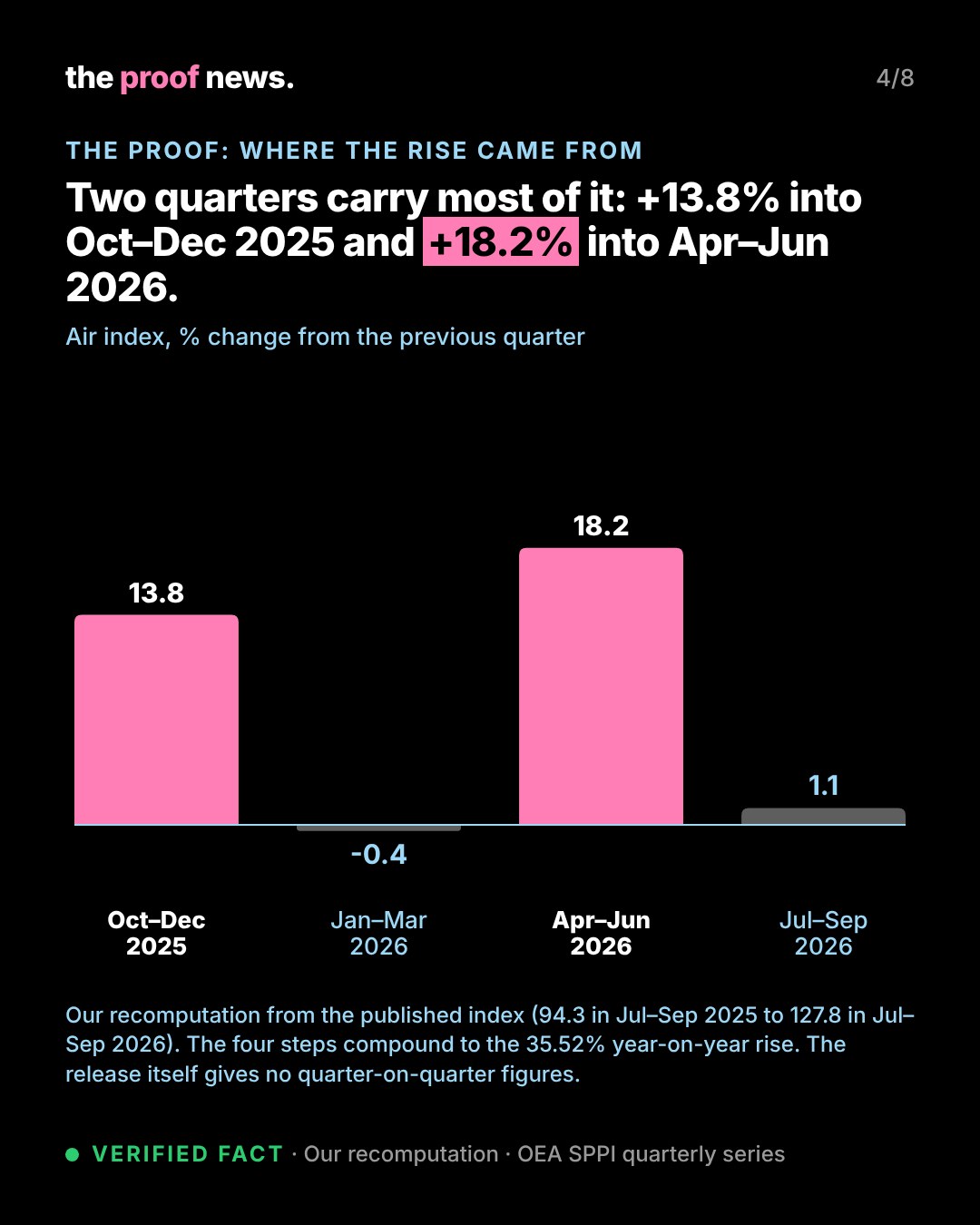
Verified factOur recomputation from that series: 127.8 against 94.3 a year earlier is +35.52%, and 126.4 against 95.8 is +31.94%, matching the release. Quarter by quarter, the year to July–September 2026 breaks down as +13.8% (July–September to October–December 2025), −0.4% (to January–March 2026), +18.2% (to April–June 2026) and +1.1% (to July–September 2026). Two quarters carry most of the rise. The release itself publishes no quarter-on-quarter figures.
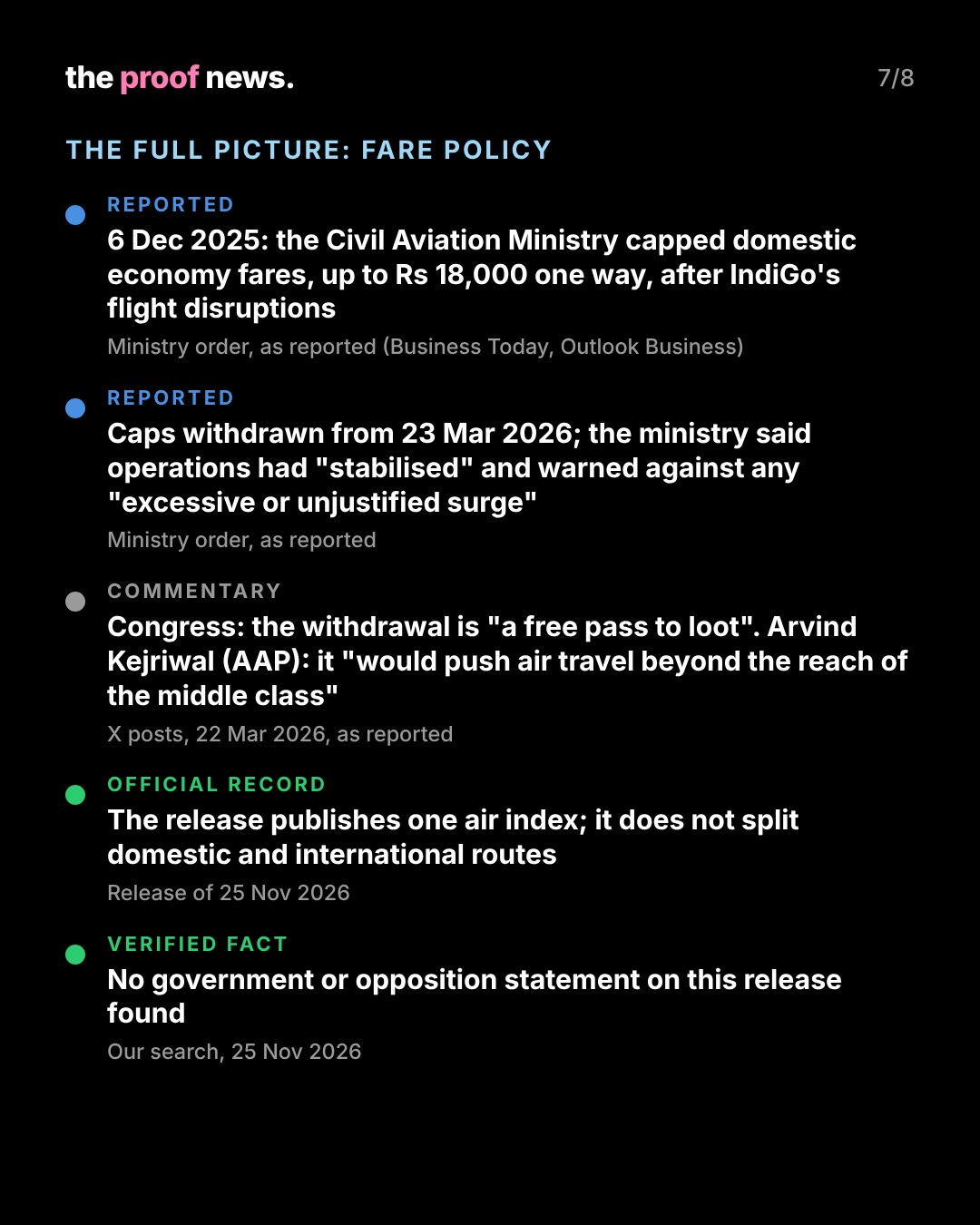
Official recordWhat the index measures. The OEA's metadata describes the Air (Passenger) index as reflecting "the average change in prices of passenger services offered by airline companies on selected domestic and international routes"; prices for 84 domestic and 66 international routes of representative airlines are collected from airline websites, and the indices are compiled at basic price. It is a producer price index, not the consumer price index for airfares. The release publishes a single air index and does not split domestic and international routes. July–September is provisional; the next release is due on 24 February 2027.
Verified factThe release does not give a reason for the rise. The fare caps described below applied to domestic fares, while the index also covers international routes; the timing alone does not show what moved the index. We found no statement from the Civil Aviation Ministry, the government or opposition parties on this release as of 25 November.
ReportedFare policy over the same period, as reported (the orders themselves were not seen): the Civil Aviation Ministry capped one-way domestic economy fares on 6 December 2025, from Rs 7,500 for flights up to 500 km to Rs 18,000 for sectors beyond 1,500 km, after large-scale flight disruptions at IndiGo. It withdrew the caps with effect from 23 March 2026, saying the situation had "stabilised, with restoration of capacity and normalisation of operations", directing airlines to keep fares "reasonable, transparent and commensurate with market conditions", and warning that any "excessive or unjustified surge" would be viewed seriously. In November 2026 the ministry notified the Bharatiya Vayuyan Niyam, 2026, which lets the Centre issue directions on fares in extraordinary situations.
CommentaryOn the withdrawal of the caps in March, Congress posted on X that the government had "given a free pass to 'looting'", and AAP convener Arvind Kejriwal said the move "would push air travel beyond the reach of the middle class" (as reported by Outlook Business and Goodreturns, 22–23 March 2026).
The proof.
Every index value and inflation rate is read from the PIB release and the OEA's own PDF and quarterly series; check.py recomputes all seven services' year-on-year rates from the series, the air index's quarter-on-quarter steps and their product (35.52%), and checks that the carousel, Reel, website and posts use the same figures. The caveats (price reference period, no weights across services, producer not consumer price, route coverage) are quoted from the release and the OEA metadata.
- PIB release 2341076: Provisional Service Producer Price Indices (base year 2022-23) for Q2 of FY 2026-27, 25 Nov 2026
- OEA press release (PDF), Service PPIs, Q2 FY 2026-27
- OEA: Service PPIs, quarterly series from Q1 FY 2023-24
- OEA: Service PPIs metadata
- Business Today: Centre lifts domestic airfare caps from March 23, 22 Mar 2026
- Outlook Business: Cong, AAP slam govt's move to remove caps on domestic airfares, 23 Mar 2026
- Goodreturns: Domestic airfare cap removed, 22 Mar 2026
- DD News: Government notifies new airfare rules, 2 Nov 2026